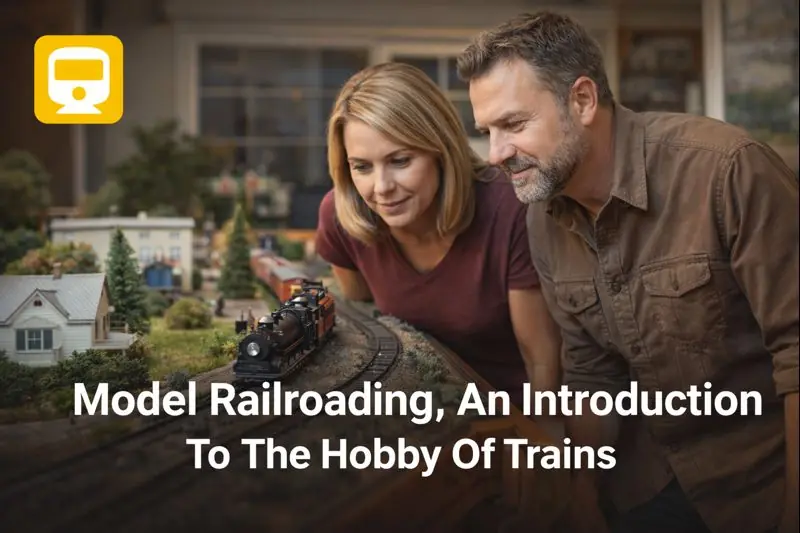
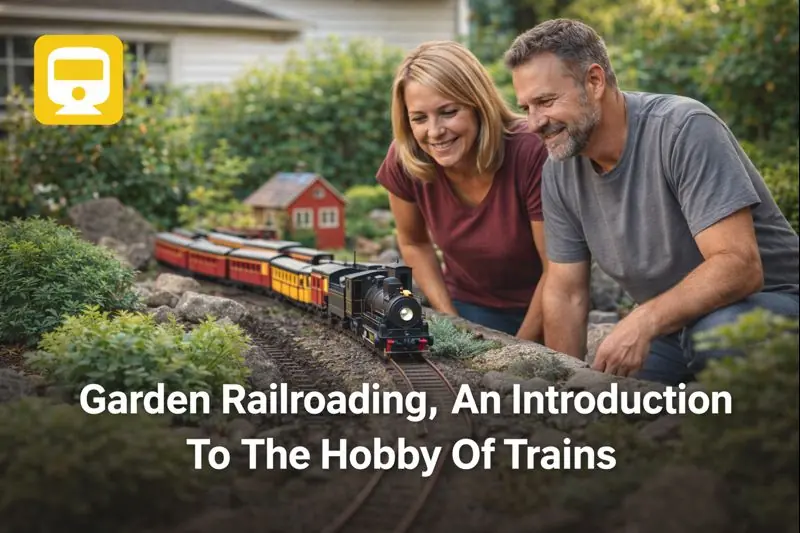
The hobby of live steam railroading involves the building and operation of functional, miniature replicas of steam-powered locomotives. Live steam locomotives are scale replicas of engines powered using real steam generated by heating water. This fascinating and unique pastime blends engineering, craftsmanship, and a deep appreciation for steam technology. This allows enthusiasts to recreate the golden age of steam on a smaller scale.
Introduction to Live Steam Model Railroading
Live steam railroading is a specialized and deeply involved hobby. It sets itself apart from the the conventional model railroading activities by using actual steam power to propel the locomotives. The term “live steam” emphasizes that these models are working and functional engines. Complete with boilers, pistons, and a real fire source (such as coal, propane, or alcohol). They are not like My Past Modeling Projects.
Enthusiasts, often called “live steamers,” build or purchase their models. Models range from small, non-rideable to large, “ride-on” locomotives capable of pulling passengers on outdoor railroads. The appeal lies in the challenge of engineering and building a functional machine. The satisfaction in operating a true steam engine and the camaraderie found within a dedicated community of fellow hobbyists in real.
A History Lesson in Origins and Innovations
The history of live steam modeling traces its roots back to the 19th century, running parallel with the development of full-size steam railways. In its early beginnings miniature steam engines first appeared as engineering tools for planning and designing Prototype Railroads. They were created by engineers themselves. Early toy versions, like the “Birmingham Dribbler,” were simple, trackless devices. The first documented model railway for entertainment was said to be created by Emperor Napoleon III of France in 1859.
The German manufacturer Märklin, began mass-marketed model train sets in the late 1800s. While many were simple tinplates, they established the idea of model railroading as a popular pastime. The introduction of electric motors by individuals like Joshua Lionel Cowen at the turn of the 20th century. This further popularized model railroading, though these were initially separate from the live steam segment.
The live steam hobby focused on functional steam power. It grew alongside general model engineering. Key innovations included the refinement of standardized scales and gauges. This made it easier for live steam hobbyists to share tracks and equipment. The development of kits and standardized plans allowed more people to build their own locomotives. The mid-20th century saw a surge in popularity, especially in the US and UK. With the establishment of new clubs and larger scales, ride-on railroads became all the craze.
Prominent Contributors To The Hobby
Walt Disney was a passionate live steamer. Disney built the elaborate 7.25-inch gauge Carolwood Pacific Railroad in his backyard. This inspired the railroads seen in his theme parks and popularizing the hobby among the general public. His barn workshop is now preserved at the Los Angeles Live Steamers Railroad Museum.
Ed St. John and Quentin Breen were other prominent contributors. St. John started the “Over-The-Hill Live Steamers” in Oregon, which eventually grew into the world-renowned Train Mountain Railroad with over 36 miles of track on 2,200 acres. Breen was instrumental in the transition of the property to the non-profit Train Mountain Institute.
The American Society of Mechanical Engineers (ASME) while not hobbyists themselves, has played a critical role. ASME helped in developing boiler and pressure vessel codes, ensuring safety standards and more. These standards are often adopted or required by state regulations for larger model boilers.
A Detailed Explanation of Scales and Gauges
Understanding scales and gauges is fundamental. I previously discussed scales and gauges in my Model Railroading, An Introduction To The Hobby Of Trains article. I’ll revisit it here as there are some differences as the terms are often used interchangeably, but have distinct meanings.
- Scale: Is the ratio of the model’s size to the actual full-size prototype (e.g., 1:8 scale means one inch on the model equals eight inches on the real train). Live steam scales are often referred to by inches per foot (e.g., 1.5″ scale).
- Gauge: Refers to the actual distance between the inside edges of the two rails of the track. Full-size standard gauge is 4 feet, 8.5 inches.
A model’s gauge must be compatible with its scale for a realistic appearance and proper operation. Live steam models exist in a vast range of sizes, from the very small to ride-on layouts.
Smallest Scales (Non-Rideable)
These scales are typically for indoor layouts, similar to traditional model railroading, but using real steam power.
- HO Scale (1:87): Though rare and often custom-built, live steam HO scale locomotives exist. The standard HO gauge is 16.5 mm.
- O Scale (1:48): Larger than HO, O scale uses a gauge of 1.25 inches. Live steam models in O scale require more space but offer impressive detail.
Largest Scales (Ride-on)
These are the quintessential live steam scales, primarily used in clubs or private backyards, where the operator and passengers sit on riding cars or the locomotive itself.
- Gauge 1 (1:32 scale) and G Scale (1:22.5 to 1:32): These large scales are popular for outdoor garden railways Locomotives run on 45 mm (approximately 1.75 inches) gauge track. G scale focuses on visual impact and are often rugged enough for outdoor use. Live steam engines in this range are commercially available and less expensive than larger ride-on scales.
- 1 inch scale (1:12): This scale often runs on 4.75-inch gauge track. It’s a popular entry point into ride-on railroading, though less common than the larger scales.
- 1.5 inch scale (1:8): This is one of the most common “ride-on” scales in the United States and North America. It typically uses 7.5-inch gauge (or sometimes 7.25-inch gauge) track, which is wide enough to safely carry adults.
- 2.5 inch scale (~1:5): A larger ride-on scale, also typically running on 7.5-inch gauge track for narrow gauge prototypes, offering even more physical presence and detail than 1.5 inch scale.
- 3 inch scale (1:4): These large locomotives require significant space and investment, and are often seen at large meets and private tracks.
- Larger Gauges: Some amusement parks and extremely wealthy individuals may have 15-inch or even 36-inch gauge railways. As these are outside the scope of the average hobbyist, I will be mentioning them for this article.
The Live Steamer Community and Required Infrastructure
The live steam community is a diverse group of highly skilled individuals bound by a shared passion for engineering and history. Hobbyists come from a wide range of backgrounds, professions and skill sets often including;
- Machinists and Mechanical Engineers, who have the precision skills necessary to build complex, working parts from scratch.
- Welders, Fabricators, and Mechanics, whose practical knowledge is invaluable for constructing boilers, frames, and other components.
- Retired railroad professionals, who bring a deep understanding of full-size railroading operations and history.
- “Do-it-yourself” types like me who understand The Value of Being A Jack Of All Trades with a drive to learn a variety of skills. From metalworking to electrical wiring and even landscaping for the railroads right-of-way holds value.
The hobby demands patience, perseverance, attention to detail, and problem-solving abilities. Many find the research aspect, ensuring historical accuracy, to be as rewarding as the physical building process.
Workshop Infrastructure and Tools
Building a live steam locomotive from scratch is a significant undertaking that requires a well-equipped workshop. While some buy ready-made models or kits, many members are “builders” who invest years in their projects. Essential tools and infrastructure can include;
- Lathes and Milling Machines: These are critical for machining metal parts to precise specifications.
- Welding Equipment: Essential for fabricating boilers and other metal structures.
- Forges: Some advanced hobbyists use forges for shaping metal components.
- CNC Machines: Increasingly, hobbyists use Computer Numerical Control (CNC) machines for highly accurate, repeatable parts.
- General Hand and Power Tools: A full complement of taps, dies, drills, saws, grinders and measuring instruments is necessary.
- Boiler Testing Equipment: For safety, boilers must be hydrostatically tested and sometimes certified to specific standards (like those derived from ASME codes). Clubs and local jurisdictions often have specific requirements for boiler certification.
Popular Clubs Within the United States
The U.S. is home to hundreds of live steam clubs. Many of them have extensive track networks and host meets and public run days. Train Mountain Railroad (Chiloquin, Oregon) is the undisputed world’s largest miniature railroad, featuring over 36 miles of 7.5-inch gauge track. It’s a non-profit educational facility dedicated to railroading history. Other notable clubs include;
West Coast
- Los Angeles Live Steamers Railroad Museum (Griffith Park, California): A well-known club where Walt Disney was a founding member. They have an extensive layout and are known for their dedication to the hobby’s history.
- Riverside Live Steamers (Riverside, California): The only large-scale railroad club in the U.S. dedicated exclusively to steam locomotives, running on both 7.5-inch gauge and 4.75-inch gauge track.
- Sacramento Valley Live Steamers Railroad Museum (Rancho Cordova, California): A large club with a significant track system that hosts public run days.
East Coast
- New Jersey Live Steamers (Central New Jersey): A non-profit club in existence since 1961, focused on serious scale modeling and historic preservation, generally not open to the public.
- Pennsylvania Live Steamers (PLSS) (Chester Springs, Pennsylvania): One of the older clubs in the US, known for their regular meets and the historical significance of their site.
- Houston Area Live Steamers (HALS) (Houston, Texas area): A prominent club in Texas, their members build and operate locomotives primarily on 7.5-inch gauge track. They were involved in advocating for state boiler code exemptions for hobby use.
The Deep South
- Ridge Live Steamers (RLS) (Dundee Florida): Just down the way from me is Ridge Live Steamers, local a non-profit organization with a 7½” gauge railroad. RLS currently has 7,500 feet of mainline with an additional 7,300 feet in sidings and yards.
How to Get Involved
Getting started in live steam can be daunting due to the advanced technical skills and investment required. However the community is welcoming to newcomers. To learn more, I recommend the following;
Recommended Reading Materials
- Live Steam & Outdoor Railroading Magazine: A primary resource in the US, published bi-monthly, featuring articles on construction projects, club news, and technical tips.
- Model Engineer Magazine: A long-running English publication (since 1898) with a global reach, offering detailed construction articles and general model engineering content.
- Books on Model Engineering and Boiler Making: Specific titles such as A Climax Class A Live Steam Locomotive Model by Edward C. Hume III provide detailed diagrams and instructions for specific builds. General engineering and machining textbooks are also highly valuable.
Resources for Finding a Local Club
- Discover Live Steam website: This site is a fantastic resource with club listings and a frequently asked questions section for beginners.
- The International Brotherhood of Live Steamers (IBLS): A global network that can help connect you with regional groups and provide information on standards and events.
- Online Forums and Social Media Groups: Websites like the Trains.com forums and various Facebook groups dedicated to live steam are excellent places to ask questions, share interests, and find local contacts.
The best way to get involved is to visit a local club during a “meet” or public run day. Most clubs are very open to new members and the experienced members are often eager to share their knowledge and mentor newcomers.
Final Thoughts
The hobby of live steam model railroading is a unique and deeply rewarding pursuit that requires a blend of mechanical aptitude, historical interest, and artistic flair. It is a hobby that offers continuous learning and challenges, resulting in a tangible, working piece of machinery that connects the operator to the industrial past.
For the newcomer, the world of live steam can seem complex and expensive. The journey of learning and building is as important as the destination of a running locomotive. Start by visiting a local club, talking to members, and immersing yourself in the available literature. With patience, persistence, and a passion for all things steam, you can embark on an incredible journey.