What Is Model Railroading?
Model railroading is a captivating and dynamic hobby. It transcends generations, offering an immersive escape into a miniature world of unparalleled detail and technological wonder. Far more than simple child’s play, it is a sophisticated blend of art, engineering, and history, attracting a diverse community of enthusiasts around the globe. The appeal of model railroading lies in its ability to merge creativity with technical skill. It allows hobbyists to design, build, and operate their own interpretation of a miniature empire.
A Brief History of Model Railroading and its Famous Enthusiasts
The Origins of Model Railroading
The origins of model railroading predate full-size passenger railroads. Some historical accounts note that model trains were built as early as 1784 for mechanical study. However, the hobby as we know it today began in the late 19th century with the rise of toy manufacturers. Early models were simple tinplate toys, often unpowered “carpet railways” that relied on a push to move.
A pivotal moment arrived around the turn of the 20th century. German toy manufacturer Märklin introduced the first in model railroading to standardized train sets with tracks in 1891. This new innovation included the crucial concept of track gauges. The track gauge is the distance between the rails. In the United States, Joshua Lionel Cowen founded the Lionel Corporation in 1901. He popularized electric-powered trains that were initially used as captivating store window displays. Today, Lionel LLC has been report to have a revenue of around $93.5 millon.
The “golden age” of the hobby spanned the interwar period and post-WWII era, as models became more detailed and realistic. The 1920s saw the introduction of smaller, more practical scales like HO scale (1:87). This new scale allowed enthusiasts to build larger layouts in less space. The 1980s brought the next revolution: Digital Command Control (DCC). DCC is an open-architecture system that enabled independent control of multiple trains on the same track. The main benefit of DCC brings unprecedented realism and flexibility along with ease of operations.
Celebrity Model Railroaders
Throughout its history, the model railroading hobby has captivated many prominent individuals in American culture. Perhaps the most famous is Walt Disney, whose profound love for steam trains led him to build the Carolwood Pacific Railroad in his backyard and whose passion directly influenced the creation of the full-size railroads found in Disney theme parks.
- In entertainment, actor Michael Gross, known for Family Ties and the Tremors movies. Michael is a vocal ambassador for the model roailroading hobby, often sharing insights into his passion for both model and prototype railroading. Other actors include Tom Hanks, the late James Gandolfini.
- The music world also boasts avid model railroaders. Rod Stewart has spent decades meticulously crafting a stunningly detailed, era-specific American layout of a 1940s Chicago landscape. Elton John is also known for his Garden Railway. Read my article Garden Railways, An Introduction To The Hobby Of Trains for more insites.
The broad appeal of the hobby demonstrates its ability to capture the imagination of people from all walks of life.
Looking Towards The Future
Optimistically, the feature of model railroading is vibrant, driven by a growing market projected to exceed $6 billion by 2031 and an increase in both established and niche manufacturers. This new boom is fueled by key product innovations, including advanced DCC products, realistic sound and lighting. 3D printing has become extremely popular for creating your own custom details, parts and more. The integration of outside technology like the 3D Printer and Lazer Cutter alone their online communities has revitalized the hobby.
The future of model railroading is bright, blending traditional craftsmanship with cutting-edge technologies. Today’s technologically advanced environment makes it an excellent time for newcomers to explore the hobby and what it offer’s. Whether drawn to engineering, artistry, or the joy of operating miniature worlds, there are abundant resources available. Discover the rewarding world of model railroading and find your passion on the tracks today!
Basic Components Of A Modern Model Railroad Layout
A modern model railroad layout is a complex, integrated system that brings a miniature world to life. Follow along with My Layout Progress Journal as I build my model railroad. Watch my layout evolved step by step. See first hand the key components that blend together to create my vision of a miniature wonderland. The main layout systems include but are not limited to the following:
Benchwork
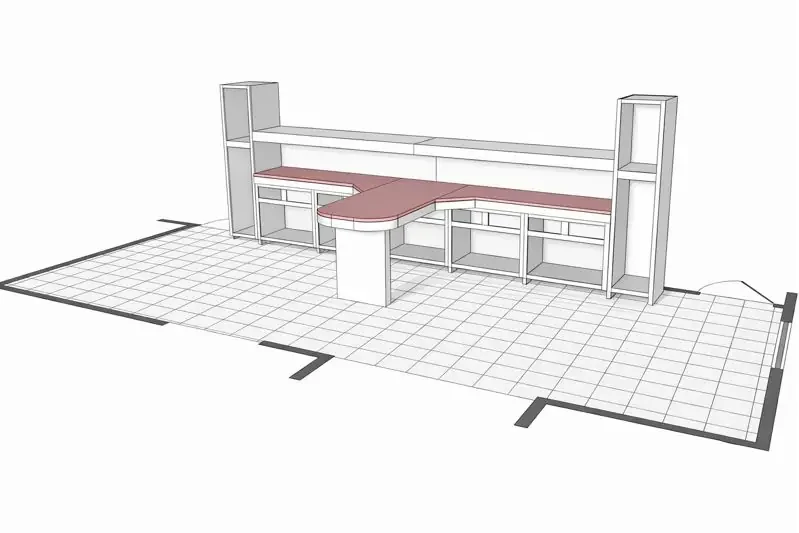
Benchwork is the foundation or support structure of the layout. It can be as simple as a modified table or a complex, purpose-built open-frame system using lumber like 1×3 pine boards or L-girders. The benchwork provides stability, and support for the track (often plywood or foam), and defines the physical boundaries and elevations of the layout. Read my article on how I used Custom Kitchen Cabinetry As Model Railroad Benchwork so it blended into my home’s decor.
Track Work
Trackwork is the “rails” of the operation. Track can range from simple snap-together pieces (like Kato Unitrack) to flex track (like Micro Engineering) to handlaid track that allows for more highly detailed realistic and custom configurations. Proper planning and laying of track no matter what type is crucial for reliable operation. Trackwork involves understanding concepts involving turnouts (switches), grades (inclines), and radius (curves) and super elevations (slopes).
Electronics
Electricity and electronics is the nervous system of any layout. Modern layouts predominantly use DCC, which allows for less physical wiring with the benefit of independent control of multiple locomotives. Each locomotive has its own address, speed, and direction, using just two wires. Electronics also power lighting for buildings and streets. Locomotive sound decoders mimic real engine sounds, and switch machines can have remote control.
Scenery
Scenery is where the miniature world truly comes alive. Scenery includes natural elements like mountains (often carved foam or hydrocal), rivers, trees, grass, and ground cover, as well as man-made structures such as buildings, roads, and bridges. Techniques like painting, weathering, and using various scenic materials transform a bare tabletop into a realistic landscape.
Rolling Stock and Locomotives
Engines that pull the cars and the various freight or passenger cars that make up the trains are the stars. Enthusiasts can choose from highly detailed ready to run scale models featuring prototypical paint schemes, lettering, details and lighting. If you enjoy the thrill of accomplishment, kits from basic to advanced are available for a lot less money. I get personal satisfaction and enjoy building kits.
Model Railroading and S.T.E.A.M. Education Opportunities
Model railroading is an inherently interdisciplinary hobby, serving as a powerful, hands-on tool for S.T.E.A.M. (Science, Technology, Engineering, Arts, and Math) education. For children and adults alike, the hobby provides practical life skills and knowledge that are directly applicable in the real world.
- Science & Engineering: Building benchwork and laying track involves understanding basic physics and engineering principles. Concepts like gravity, friction, momentum, and structural integrity come into play when designing inclines, bridges, and tunnels. Hobbyists learn how a steam engine works, for example, by observing how boiling water creates pressure to move pistons.
- Technology & Electronics: Modern model railroading heavily relies on technology. Learning to wire a layout, install DCC decoders, and set up automated control systems provides real-world experience in electrical circuits, wiring, and basic programming.
- Arts: The “A” in S.T.E.A.M. is vital. Scenery creation is an art form, involving painting, color theory, carving, and composition. Weathering techniques used to make models look aged and used teach artistic skills in realism and attention to detail.
- Math: From the initial planning stages, math is essential. Calculating track circumference, determining gradients for smooth operation, measuring space and materials for benchwork, and working with scale ratios (e.g., 1:87 for HO scale) all involve practical math skills.
Engaging kids early in the hobby teaches them long term critical thinking and problem-solving (e.g., how to fix a derailment or a wiring issue) skills. They will build personal relationships, learn collaboration, fine motor skills, and an appreciation for patience and hard work. It provides a screen-free, hands-on environment for learning and creativity. I believe this to be true as it taught me The Value In Being A Jack Of All Trades at an early age.
Crossing Over Into Other Interests & Hobbies
The appeal of model railroading extends beyond just building trains. It can serve as a gateway to numerous other interests and hobbies.
- Photography and Videography: The detailed, realistic scenes created on layouts are perfect subjects for photography and videography. Hobbyists often spend hours capturing their miniature worlds from unique perspectives, experimenting with lighting and depth of field.
- History: Many enthusiasts focus on specific historical eras and regions. Building their layouts to accurately recreate the architecture, rolling stock, and atmosphere of a particular time in history. This requires significant research into historical photographs, blueprints, and records, making the hobby a deep dive into history.
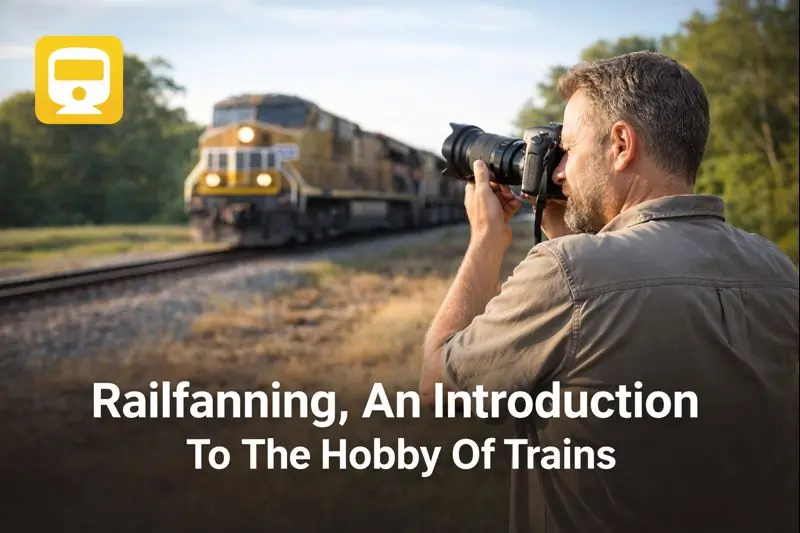
- Railfanning: A love for model railroading often translates into an appreciation for the real-world. Railfanning involves observing, photographing, and documenting actual trains and railroad operations, providing inspiration and authenticity for the model world. Read my article Railfanning, An Introduction To The Hobby Of Trains for more insights.
Getting Started in the Hobby
Model railroading can offer a lifetime of enjoyment and learning. To embark on your journey, the best first steps involve exploring the vast resources available. For initial guidance, many excellent books and magazines provide instruction on everything from basic track planning to advanced scenery techniques. Publications like Model Railroader Magazine (Paid) and Model Railroad Hobbyist Magazine (Free) are great places to start. The National Model Railroad Association (NMRA) also provides a wealth of information, standards, and beginner’s guides on its website.
Connecting with active model railroaders in your area is the most effective way to get started in the hobby. Local clubs are welcoming environments with experienced hobbyists eager to share their knowledge and provide hands-on help. Many clubs host public events and open houses, which are ideal for seeing different scales and techniques in person. To find a club in your area visit the NMRA Club Directory.
Estimated Costs of Getting Started
Probably one of the most common questions for prospective model railroaders is, “How much does it cost?” The answer is highly flexible, as the hobby can fit almost any budget. You can start small with minimal investment and expand over time, or jump in with a more substantial commitment. To begin, you could get a pre-packaged starter set and that requires just a small space to operate. At the time of publishing this article (Late 2025), the initial investment typically ranges from $200 to $500 USD. Depending on the scale (HO scale is generally the most popular and affordable starting point) and the level of detail it could be more.
A Basic Starter List:
One of the most economical way to enter the hobby is by purchasing a ready-to-run (RTR) starter set. These kits provide all the essentials to begin operating a train on a simple loop of track immediately. A typical initial purchase list would look something like this:
- Train Set (Locomotive, Rolling Stock, Track, Power Pack): This is your all-in-one solution. Expect to pay between $150 and $300 for a decent quality set from brands like Bachmann, Kato, or Athearn. These sets usually include an oval of track and a basic power supply or DCC controller.
- Basic Scenery Materials: A small pack of grass mat, a few trees, and some basic ground cover might add another $20 to $75 to your initial purchase, allowing you to quickly add some visual interest to your layout.
- Essential Tools: A hobby knife, small screwdriver set, and model glue are inexpensive and usually found in a typical household or purchased for under $30.
Estimating a total initial outlay of approximately $200 to $500, you can have a functioning, running model railroad operation on a small table or the floor within an afternoon.
Upgrades and Expanding Your Layout
As your interest grows, you will likely want to expand your track plan, add more realistic operations, and enhance the scenery. This is where costs begin to vary widely based on personal ambition.
- Additional Rolling Stock: Individual freight or passenger cars can cost anywhere from $20 to $80+ each, with highly detailed, limited-run models fetching higher prices.
- Locomotives: Adding a new, higher-quality locomotive, especially one with DCC sound installed, is a significant investment, typically ranging from $150 to $400+ per engine.
- Track Expansion: Adding turnouts (switches) and more track sections to create sidings and yards can cost $5 to $30+ per piece, depending on type and size.
- DCC Systems Upgrade: Moving from a basic power pack to a more robust DCC system for controlling multiple trains can cost $200 to $500+, depending on the features and power output.
- Scenery Upgrades: High-quality scenic materials, kits for realistic structures, and weathering supplies can add significantly to the budget. You might spend $50 to $200+ just on materials for a moderate-sized section of the layout.
Upgrades are incremental and many hobbyists budget a small amount monthly to add new items as they go. I have visited many train shows and swap meets over the years. I have found numerous deals by shopping second hand used and discounted new old stock items. I may have not saved money, but I have gotten more trains for my buck.
The Hobbyist's Perspective On Long-Term Investments
Over a lifetime, the investment in model railroading can be substantial. Spread it out over many years by including it your personal budget. Many active hobbyists estimate an average annual expenditure of $500 to $2,000+ on new equipment, tools, and materials. Although I know some who spend thousands each month.
For dedicated, long-term hobbyists, the investment over a lifetime can be substantial, often representing a significant passion-driven expenditure. These enthusiasts build large, permanent layouts over decades, constantly refining and adding to their miniature worlds. While precise figures are difficult to obtain form the average hobbyist, anecdotal evidence from prominent model railroaders can offer some perspective:
Rod Stewart, whose massive 1940s Chicago layout has been featured in hobby magazines, has indicated that his multi-decade project has cost him an estimated $70,000 to $100,000+ over the years. He has described his approach as meticulous, funding the project while on tour and investing heavily in specific, detailed components.
More typical long-term hobbyists is someone who builds a large, basement-sized. This hobbyists might reasonably spend anywhere from $10,000 to $30,000+ over a 20-30 year span. Averaging a few hundred to a thousand dollars per year makes it manageable for the non-rock star.
Walt Disney invested heavily in his backyard Carolwood Pacific Railroad. His custom-built, large-scale locomotive alone costing a considerable sum in 1950s dollars. His willingness to invest significantly in the passion project showed his passion was real.
Final Thoughts
Ultimately, model railroading is what you make it to be. There is no wrong or right way to do things. Model railroading is a hobby that can grow with your budget and interests, from a simple loop of track to an expansive, highly detailed masterpiece. The key takeaway is that, it’s your railroad, you do what you want. You can enjoy the hobby with a simple, inexpensive setup or invest heavily in a sprawling miniature empire. The value is found not in the money spent, but in the time, creativity, and enjoyment derived from each and every step learned along the way.
Editorial Note
It is important to note that the specific dollar figures for items like starter sets, individual cars, and long-term investments are based on current market trends observed across multiple commercial sites and anecdotal reports within hobbyist communities at the time of writing (late 2025). The estimated costs provided are typical figures and can vary widely based on location, manufacturer, scale, and time of purchase.
The following represent examples of the types of sources that have be consulted to determine general price ranges and information for the content provided:
- Model Railroader Magazine and Kalmbach Books (Various titles, including beginner’s guides, track planning, and wiring manuals, which also implicitly outline the required purchases and associated costs).
- Online hobby retailers and price guides (e.g., TrainWorld, Fifer Hobby Supply, Midwest Model Railroad) for typical product pricing of starter sets, individual items, and tools.
- Online forums and community discussions (e.g., Trains.com Forums, Quora, MRH Forum) where hobbyists discuss costs, value, and personal investment in their layouts.
- Articles and news snippets discussing the economics of the hobby and prominent enthusiasts’ investments (e.g., FreightWaves on industry costs, anecdotal reports on Rod Stewart’s layout).
As this article is a general introduction, no single formal academic study or survey was used to determine a definitive, fixed cost of the hobby, but rather a synthesis of industry-wide information on typical pricing and spending patterns.