
Home |
Prototype and modeling articles fueling passion for all things trains...
Tuscola & Saginaw Bay Railway started operation in the Vassar Michigan.
Tuscola & Saginaw Bay took over operation of the Ann Arbor Railroad between north of Ann Arbor and Alma and the St. Charles branch.
Tuscola & Saginaw Bay took over Ann Arbor Railroad operations between Alma and Elberta.
Michigan Northern was removed as the designated operator of the state-owned lines north of Cadillac to Petoskey/Bay View, including the Traverse City-area lines, and replaced by the TSBY
Tuscola & Saginaw Bay purchased about 2.5 miles of CSX track at Clare.
The Huron & Eastern Railway assumed operation of the original 54-miles TSBY operation near Vassar.
The Tuscola & Saginaw Bay Railway Co. was purchased by Federated Railways and renamed Great Lakes Central Railroad.
The Tuscola & Saginaw Bay Railway Co. (TSBY) was a pivotal player in Michigan’s regional rail network for nearly 30 years. Transitioning from a state-subsidized operator of former Penn Central lines it became a successful private short-line enterprise. Established in April 1977, the TSBY initially focused on a 44-mile segment in the Michigan “Thumb” area. The first locomotive, the “Big Chief,” arrived in December 1977.
A significant expansion occurred when the State of Michigan tapped TSBY to operate substantial portions of the former Ann Arbor Railroad. This happened in two phases. First, the segment north of Ann Arbor to Alma and the St. Charles were taken over on October 1, 1982. The remaining northern portion to Elberta was taken over on October 1, 1984.
In 1991, Jim Shepherd purchased the railway. Through strategic partnerships with trucking firms and the use of facilities in cities like Vassar, Owosso, Cadillac, and Clare. Jim significantly grew annual carloads from approximately 7,000 to 10,000. TSBY was a Class III carrier with about 45 employees and a small fleet of EMD and Alco locomotives.
The company ended operations in May 2006 when Federated Railways, a subsidiary of Federal Capital Corporation acquired all the assets. Following the sale, the railway was renamed the Great Lakes Central Railroad, marking the end of the Tuscola & Saginaw Bay Railway Co. era.
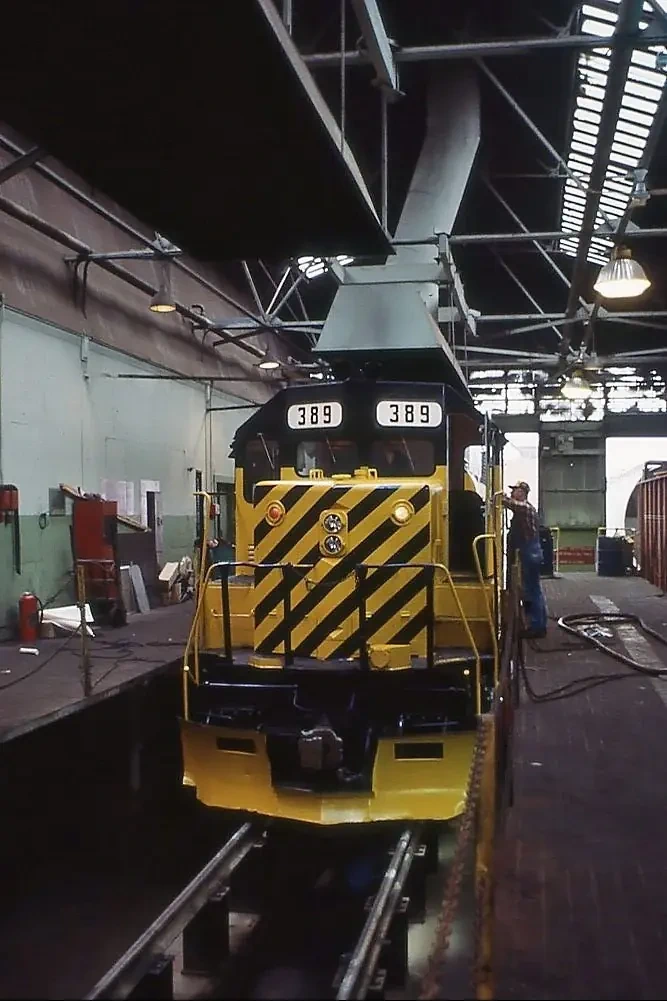
The Tuscola & Saginaw Bay Railway owned, rented or leased a number of railroad facilities across its network in Michigan. This included it’s headquarters, engine servicing facilities, and various transload stations for different materials and other assists. Current known properties that were owned around Michigan included:
Coke Transload: A rail to truck transfer was located at 103 10th St, Cadillac MI. This facility handled ABC coke (used in engine blocks) that was transferred to trucks for final delivery.
Clare Engine House: A small yard and engine servicing facility was located at 1203 N Mitchell St, Cadillac, MI just around the corner from the coke transload.
Poly Pavilion was a plastics holding facility operated by Northern Logistics in cooperation with the TSBY. A Michigan Railroads Association Rail Updates Fall 2001 article shows a photo of the transload facility. The photo is believed to be across the street from 805 Industrial Dr, Clare, MI adjacent to whats known as today’s Pere-Marquette Rail-Trail. It had a new siding installed to handle the large volume of plastic pellets.
Passenger Depot: Despite intern discussion, there was never passenger service on the TSBY with the exception of the occasional railfan excursion by the Steam Railroading Institute. The historic Clare Union Depot located at 201 W 4th St, Clare, MI was sold to the city of Clare just before the Federated Railways acquisition in 2006. The building now houses a museum and the Chamber of Commerce.
Railway Offices 1984-2006: The company moved its headquarters to 600 Oakwood Ave Owosso, MI at some point after 1984 and before 1991 (If you know the exact date please let me know). This also became the central dispatching location for TSBY operations.
Each of these facilities were integral to the railway’s business strategy. A strategy of connecting long-distance rail freight to local industries and trucking partners throughout Michigan.
The Tuscola & Saginaw Bay Railway transported a diverse mix of bulk and manufactured goods. TSBY served industries and agricultural interests across Michigan. The relied on long-distance rail freight connections to local industries via its own trackage and with trucking partners. Key Commodities, Quantities, and Locations included:
| Commoditiy | Quantity | Originating / Transfer Locations | Destination / Customers |
|---|---|---|---|
| Agricultural Products | Approximately 10 million bushels per year | Grain elevators at various locations, including Middleton, west of Ashley, and north of Owosso near Chesaning and St. Charles | Outbound shipments to processing facilities or interchange partners |
| Industrial Sand | Approximately 300,000 tons per year | Yuma sand facility | Cleveland, Ohio, for use in a Ford plant making engine blocks |
| Plastics | Not specified (part of overall carload increase) | Clare plastics holding facility | Local businesses, with last-mile delivery handled by trucks |
| Lumber | Not specified (part of overall carload increase) | Received from the Pacific Northwest or Canada | Various businesses in Michigan |
| ABC Coke | Not specified (part of overall carload increase) | Birmingham, Alabama, foundry | Transload station in Cadillac, then transferred to trucks |
| Molasses, Sugar, Beet Pulp | Not specified (part of overall carload increase) | Michigan Sugar Company plant in Caro | Outbound shipments |
| Pickles | Not specified (part of overall carload increase) | Dykhouse Pickle Co. in Vassar | Destinations served by insulated boxcars and refrigerator cars |
| Agricultural Chemicals | Not specified (part of overall carload increase) | Unspecified origin | Seasonal deliveries to farms and agricultural businesses |
| Propane and Cement | Not specified (part of overall carload increase) | Various origins | Destinations within the railway's service area |
Currently being researched.
Yuma Sand Facility: This sand facility was a power house customer and generated over 300,000 tons of industrial sand. Unit train carloads were shipped south to interchange with the Ann Arbor Railroad in Osmer.
The facility was owned by a few diffrent intities over its service life.
Sargent Sand Company (an earlier owner).
Fairmount Santrol (later owner, the company restructured and closed the mine around 2016).
Wexford Sand Company was the name associated with the physical operation as seen on some maps.
Ann Arbor/Osmer: TSBY operated lines north of Ann Arbor, interchanging freight with the Ann Arbor Railroad at Osmer (just north of Ann Arbor’s Ferry Yard).
Alma: This city was a key junction point, representing the northern limit of one segment of track operations until 1984.
Middleton / Ashley: TSBY had small branch lines and made stops at grain elevators in these areas.
Millington, Munger, Colling, Richville, Harger (near Saginaw): These were cities and towns along the original lines operated by TSBY in the “Thumb” area.
Traverse City / Petoskey: TSBY operated lines to these cities in Northern Michigan, used for both freight and considered for potential passenger service.
The Tuscola & Saginaw Bay Railway interchanged traffic with several railroads in Michigan along its routes. Primary interchange partners and locations were:
Ann Arbor Railroad (AA) at Osmer (located just north of Ann Arbor’s Ferry Yard). This was a major connection point for moving freight north/south on the primary Ann Arbor line.
Grand Trunk Western (GTW) now part of Canadian National (CN) at Denmark Junction (near Saginaw/Richville/Harger area) and also at Diann and Toledo, Ohio. They also had an interchange at Durand later on.
Conrail (CR) at Toledo, Ohio. Although a connection existed in Ann Arbor, so no traffic was interchanged there.
Chessie System (B&O) now part of CSX Transportation (CSX) at Toledo, Ohio, and also at Ann Pere near Howell, Michigan.
Norfolk and Western (N&W) now part of the Norfolk Southern Corporation (NS) at Milan and Toledo, Ohio.
Mid-Michigan Railroad (later part of Genesee & Wyoming’s operations) at Alma.
Huron & Eastern Railway (also part of Genesee & Wyoming) at Durand and potentially in the Saginaw area.
Interchange points facilitated both inbound and outbound long-haul shipments. TSBY connect local Michigan industries and agriculture with the broader North American Class I rail networks.
The Tuscola & Saginaw Bay Railway primarily operated a small, varied fleet of locomotives, freight cars and maintenance of ways equipment (MoW). This included both owned and leased equipment. Throughout its history, TSBY only regularly operated a select few of it diesel locomotives. The following table includes acquired, purchased and state-assigned assets only.
| Make | Model | Number | S/N | Build Date | Former Road | Disposition | Notes |
|---|---|---|---|---|---|---|---|
| ALCO | RS-1 | 2394 | 79572 | ATSF | Corkpine Express, Chopped Nose | ||
| ALCO | RS-2 | 466 | 73645 | D&M 466 | Sold to Michigan Southern and Scraped | C.M. Ritter | |
| ALCO | RS-3 | 1508 | 80735 | ||||
| ALCO | S-3 | 10 | AA | ||||
| EMD | GP-9 | 5967 | 20876 | B&O 5967 | Unknown | Never used by TSBY | |
| EMD | GP-9 | 6515 | 22989 | B&O 6515 | Unknown | Never used by TSBY | |
| EMD | GP-9 | 6541 | 23015 | B&0 6541 | Unknown | Never used by TSBY | |
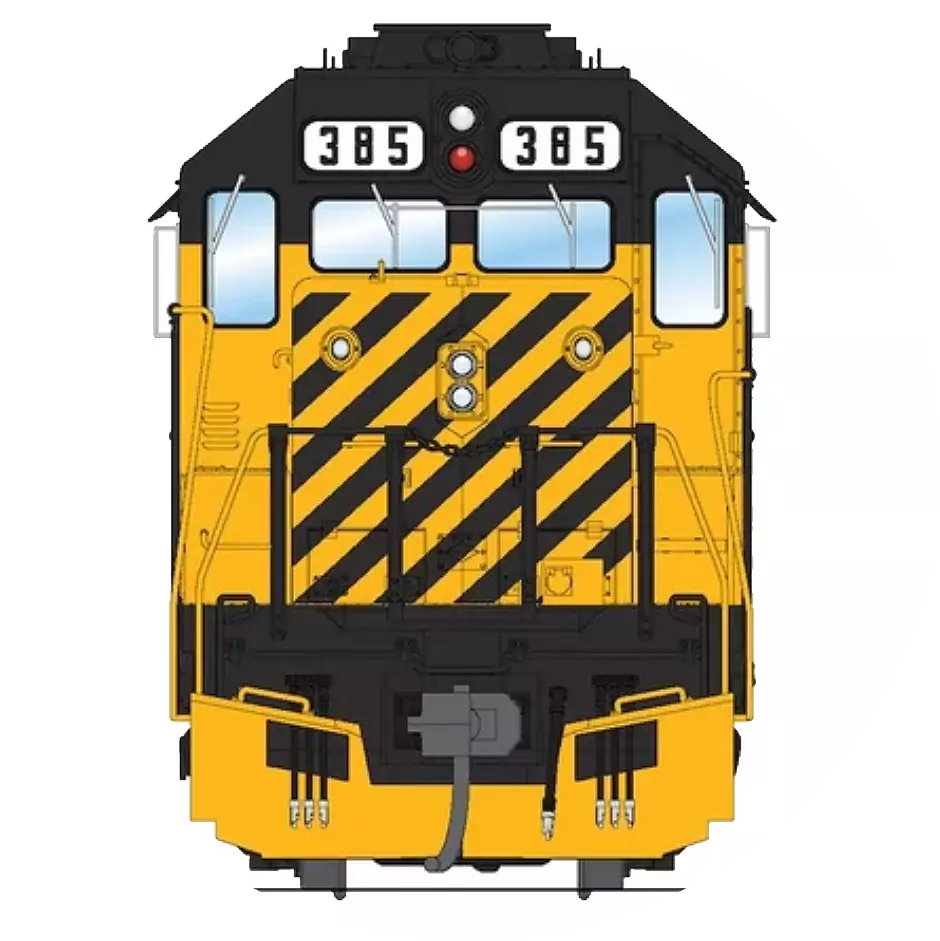
| EMD | GP-35 | 385 | 28991 | March 1964 | AA 385 | Transferred to GLC 2006 | The Elmira |
| EMD | GP-35 | 386 | 28992 | March 1964 | AA 386 | Scraped 1986 | |
| EMD | GP-35 | 387 | 28993 | March 1964 | AA 387 | Scraped 1996 | |
| EMD | GP-35 | 388 | 28994 | April 1964 | AA 388 | Transferred to GLC 2006 and Scrapped | City of Petoskey |
| EMD | GP-35 | 389 | 28995 | April 1964 | AA 389 | Transferred to GLC 2006 and Scrapped | City of Traverse City |
| EMD | GP-35 | 390 | 28996 | April 1964 | AA 390 | Transferred to GLC 2006 | City of Durand |
| EMD | GP-35 | 391 | 28997 | May 1964 | AA 391 | Transferred to GLC 2006 | City of Owosso |
| EMD | GP-35 | 392 | 28998 | May 1964 | AA 392 | Transferred to GLC 2006 | City of Mt Pleasant |
| EMD | GP-35 | 393 | 28999 | June 1964 | AA 393 | Transferred to GLC 2006 | City of Cadillac |
| EMD | GP-35 | 394 | 29000 | June 1964 | AA 394 | Transferred to GLC 2006 | City of Clare |
| EMD | GP-35 | 2646 | 29901 | January 1965 | SOU 2646, NS 2646 | Sold to Eastern Idaho Railroad | High Hood |
| EMD | GP-35 | 2648 | 29903 | January 1965 | SOU 2681, NS 2684 | Transferred to GLC 2006 and Scrapped 2018 | City of Howell, High Hood |
| EMD | GP-35 | 2681 | 29936 | March 1965 | SOU 2681, NS 2681 | Transferred to GLC 2006 | High Hood |
| EMD | NW-2u | 1977 | 1695 | UP 1034 | Transferred to GLC 2006 | City of Vassar | |
| GE | 25T | 2126 | 31777 | January 1953 | Petoskey Portland Cement | Transferred to GLC 2006 | Shop Switcher |
TSBY owned a small fleet of its own freight cars and also leased others to meet the needs of its customers. Most of the freight car roster included;
Covered Hoppers: The railway took delivery of 50 ACF covered hoppers in the summer of 1979 and another group of 50 (grey) covered hoppers (built by Richmond Tank Car) in 1980. At there peek, TSBY had a total of at least 100 owned cars just for grain products. Additional covered hoppers were also leased from Chicago Refrigerator Dispatch in the 1980s.
Insulated Boxcar: It is believed that at least one car, of Reading ancestry, was purchased to handle traffic from a local pickle company.
Refrigerator Cars: 11 refrigerator cars (originally from American Refrigerator Transit) were also acquired to serve the Dykhouse Pickle Co. of Vassar.
| Make | Model | Quantity | Reporting Marks | AAR Type | AAR Class | Plate | Notes |
|---|---|---|---|---|---|---|---|
| Manufactur Name Here | Model Name Here | 0000 | TSBY 000000-000000 | C113 | |||
As a young teenager, I did not have the privilege of knowing anyone who worked for the Tuscola & Saginaw Bay Railway. I found very little publicly known information on employees and the work culture. A Michigan Railroads Association Rail Updates Fall 2001 article noted that the employee count at the time of publication was only fifty.
As with most privately-owned short-line railroads, its was a lean operation. Given it’s size, the workforce would likely have been smaller in the initial years and gradually increasing with the expansion of the early 1980’s. Either way, the total number of employees was relatively small, even after it expanded operations across Michigan. In the final years, around early to leading up to the 2006 sale, A Michigan Railroads Association Rail Updates Fall 2001 article detailed TSBY having only fifity employees time of publication.
Management: A 1979 report filed by TSBY to the Interstate Commerce Commission lists the company’s general officers as the following;
Twelve years later and the more historically notable manager was Jim Shepherd. Jim served as the company’s chairman and chief executive officer (CEO) after purchasing the railroad in 1991. He had two major business partners who owned a combined 39 percent of the company. I was not able to find publicly available information on the two specific partners.
Office Staff/Administration: The company had headquarters in Vassar initially and later in Owosso, where administrative tasks, dispatching, and payroll would have been handled by office staff. I was not able to determine how many people worked in this role.
Rail Operations: Engineers and conductors are the backbone of railroad operations. They are responsible for the safe movement of freight across network generating revenue. I was not able to determine how many people worked in this role.
Mechanical Department: The maintenance and repair of TSBY’s 12 diesel locomotives and single switcher only required a few workers. The book Railroads Across North America: An Illustrated History mentioned Renee Holbrook. Renee was a woman mechanic who performed maintenance on the GP35 diesel locomotives. Little is know about her other than she was TSBY’s first woman mechanic. She was interviewed while checking over a GP35 locomotive’s eight, 74-volt batteries.” She was quoted saying “I’ve been working almost every day for a month (on 36-month inspection)”. The article also stated “She has been a mechanic at the rail yard since October 1998“.
Maintenance of Ways & Structures: These crews are responsible for maintaining the trackage and associated infrastructure (e.g., bridges, buildings). I was not able to determine how many people worked in this role.
The company’s success was largely attributed to efficient operations and a lean but effective staffing made up of dedicated men and woman.
Jim Shepherd was the long-time owner, chairman, and CEO of the Tuscola & Saginaw Bay Railway. Jim bought the railroad in 1991 and lived near Howell, Michigan. He was a key figure in the short-line rail industry in Michigan. He was responsible for growing the railway’s operations and profitability during his tenure.
An article published in May 2006 (and re-published on the NARCOA website in January 2018) quotes Jim stating: “When we came here 10 years ago, we were handling 7,000 carloads a year… Now we’re up to about 10,000 more a year“. Jim’s own statement confirms the TSBY’s growth between the period of approximately 1996 to 2006. This was a 10-year span leading up to the time of the article’s original reporting.
Under Jim’s leadership, the company’s annual carloads increased significantly. He remained as the owner until the company was sold to Federated Railways in May 2006, after which it was renamed the Great Lakes Central Railroad.
Jim was involved in other business ventures as well. Some directly related to the operations of the railroad itself, primarily in the logistics and transportation sector such as;
Partnering with local trucking firms: One of his key business strategies was collaborating with local trucking firms to offer combined rail and truck services. This allowed the railway to haul heavy freight over long distances. Then have trucks handled final delivery to customers. This was especially true for the plastics holding facility in Clare.
Logistics facilities: TSBY had other facilities throughout northwest Michigan for distributing various materials, including cement, coke, drilling clay, propane, and silica sand. Jim’s business plan appears to have been centered on growing the profitability and scope of the regional rail and logistics network in Michigan.

Specific annual revenue reports for the Tuscola & Saginaw Bay Railway from 1977 to 2006 were not publicly available. The TSBY was a privately-owned short-line railroad. Such companies were not generally required to publish detailed financial statements for public consumption the way Class I railroads are. However, historical data provides some context on the business model and growth.
Early Operations (1977 onwards): In its initial years, the TSBY was organized by local shippers and owners who supplied capital. The Michigan State Transportation Commission agreed to subsidize anticipated losses to ensure regular service, indicating a potentially limited or unstable initial revenue stream.
Reporting Requirements: Railroads are generally classified by annual operating revenues. TSBY was a Class II or Class III railroad for most of its history. This meant its revenues were below the thresholds for mandatory public financial reporting. The Interstate Commerce Commission (ICC) or its successor, the Surface Transportation Board (STB) normal handle such reporting.
Growth under Jim Shepherd: Under Jim Shepherd’s ownership (post-1991), annual carloads increased significantly from approximately 7,000 to around 10,000 by 2006. This growth in traffic volume indicates a corresponding positive trend in revenue over that period, though precise figures remain undisclosed.
While detailed revenue numbers are not accessible, the company’s growth in carloads and eventual sale to Federated Railways in 2006 suggest it became a profitable and successful regional operation.
Federated Railways, Inc. purchased the Tuscola & Saginaw Bay Railway Company in May 2006, after which TSBY was renamed the Great Lakes Central Railroad (GLC). The publicly available information my researched reviled, primarily consists of key details on the acquisition:
Purchasing Entity: Federated Railways, Inc., a subsidiary of Federated Financial Corp. of America.
Outcome: The acquired company was renamed to the Great Lakes Central Railroad (GLC).
Business Details: Federated Railways president and CEO, Mike Bagwell, also assumed the role of president and CEO for the newly acquired TSBY. At the time of the purchase, it was reported TSBY operated a 405-mile network, primarily moving freight, and was involved in discussions with State of Michigan about potential year-round passenger-rail service.
Strategic Goal: According to a prepared statement in an online news article published by Progressive Railroading quotes Mike Bagwell, the President and CEO of Federated Railways, saying the goal was to “continue to provide quality customer transportation services” and that the partnership would support “long-term success of local rail service in Michigan”.
Regulatory Filings: The acquisition involved standard regulatory procedures and name changes with bodies like the Surface Transportation Board (STB), as noted in subsequent federal register documents related to the railroad’s operational history.
Specific financial terms of the sale, such as the purchase price, were not publicly disclosed in the general news coverage and announcements available.
It has been nearly two decades now since the Tuscola & Saginaw Bay Railway was sold. The TSBY affectionately referred as “Tisbee”, has a notable following and its legacy is being preserved by Railfans and Model Railroaders like myself. Over the years as technology has advanced, so has our abilities to document, discuses and share it’s history. Here are just some of the many ways we are remembering the Tisbee…
Online Communities: A strong following exists in online communities and historical forums. Sites like MichiganRailroads.com and various Facebook groups dedicated to Michigan rail history. Railfans actively share historical photos, maps, and discussions on such sites.
Historical Documentation: Railfans and historians have compiled detailed timelines, equipment rosters, and articles documenting the railway’s history. Multimodalways.com provides archives and official maps that preserve operational details of the line. I relied them, my personal accounts and other online archives for this article.
Clare Union Depot Museum: A prominent example of preservation is the Clare Union Depot. Just before the 2006 sale to Federated Railways, the TSBY sold the abandoned depot to the city of Clare. This historic building has been restored and now houses a railroading museum.
Artifacts and Equipment: Most TSBY locomotives were absorbed into the Great Lakes Central Railroad fleet and are still running in 2025. Other equipment from that era may be found in various locations in Michigan abandon. Preservation efforts often focus on documenting the fate of specific locomotives and freight cars. Most of the surviving Michigan Northern equipment that TSBY absorbed ended up in Cadillac.
MDOT Documentation: The State of Michigan, as the owner of much of the trackage operated by TSBY, has official documentation and maps. They are used by researchers and historians to understand the railroads evolution.
Museum Collaboration: Organizations like the Saginaw Railway Museum, collaborate with other historical groups. Request for lending artifacts for events at Genesee County’s Crossroad Village, indicate an active regional interest in rail preservation.
Several resources have documented the history and operations of the Tuscola & Saginaw Bay Railway. Some notable articles within specialist rail publications and online historical include;
Progressive Railroading: This industry magazine published news articles related to the company, including a report in May 2006 on the sale to Federated Railways and the subsequent renaming to the Great Lakes Central Railroad.
Trains Magazine: As a leading publication in the rail industry, Trains Magazine has likely featured articles or news snippets over the years covering TSBY operations, expansion, and eventual sale.
Railfan & Railroad Magazine: Another key industry publication that has covered short-line railroad operations in the US. This likely included TSBY in its news sections or feature articles during its operating years.
Railroads Across North America: An Illustrated History: This book contains details on various railroads, and is a source of some of the historical and employee information, such as the mention of Renee Holbrook.
MichiganRailroads.com: This website is a rich online resource for Michigan rail history. It hosts numerous articles, maps, and historical timelines dedicated to the TSBY and the other short lines operating in Michigan.
Multimodalways Archives: This website hosts a PDF archive of operational information and maps, providing detailed information for researchers and enthusiasts.
North American Railcar Operators Association (NARCOA): An article about the TSBY operations was republished on the NARCOA website. The article provides an in-depth look at the company in its later years.
The Double A: A multi-part article by Rob Adams titled “Boat Landing: A Look Back” detailed aspects of the Ann Arbor Railroad history which the TSBY later operated. This four part article ran in the fall 1994, winter 1995, spring-summer 1995 and winter 1996.
I have not been able to find high-quality, professionally produced documentaries specifically dedicated solely to the TSBY.
YouTube: I have found some older videos of TSBY trains sometimes including historic footage or commentary on the from the era.
Railfan Collectibles/Videos: I have found some specialized companies that have produced railfan videos including brief footage of the TSBY. The videos general were on the larger railroads TSBY interchanged with in the 1980’s and 1990’s.
An extensive historical summary, including the anecdote about Renee Holbrook and carload increases, appears in an article (by Robert Warrick) that was republished on the North American Railcar Operators Association website in January 2018.
Today, the railway remains only with its operational footprint and history. Some railfans like myself bask in its former glory, keeping it near and dear in our hearts. The company’s story serves as a valuable case study in the rail industry. It demonstrated the evolution of a short line that successfully navigated the complexities of state contracts, equipment acquisitions, and market demands for nearly thirty years. The Tisbee’s journey from a small operator in Vassar to a significant regional carrier remains a point of interest for many of us still to this day.
For a select few like myself, carrying on it’s legacy is a labor of love in miniature. As a former Michigander and a current model railroader, I encourage you to follow along with My Layout Progress Journal as I navigate the complexities of building the Tuscola & Saginaw Bay Model Railway in HO Scale. The journal showcases my build progress threw informational posts in chronological order from conception to completion as I work to build my miniature HO Scale empire.
This article is a dynamically growing, foundational piece of content focused on providing historical accuracy with details. I’m not a professional historian, just a railroad enthusiast. If you can contribute to the accuracy and growth of this content, or have relevant documents, images, or knowledge of the Tuscola & Saginaw Bay Railway, please Contact Me I would like to talk with you. I don’t always get things right, but I want to.

Receive an occasional email on a variety of topics in the form of informative articles, how-to guides, news, special offers, and more…
Privacy Statement and other Legal Notices.
Subscribe Now!
Notifications
