Home |
My honest opinion based on personal experience, hands-on use and long-term ownership.
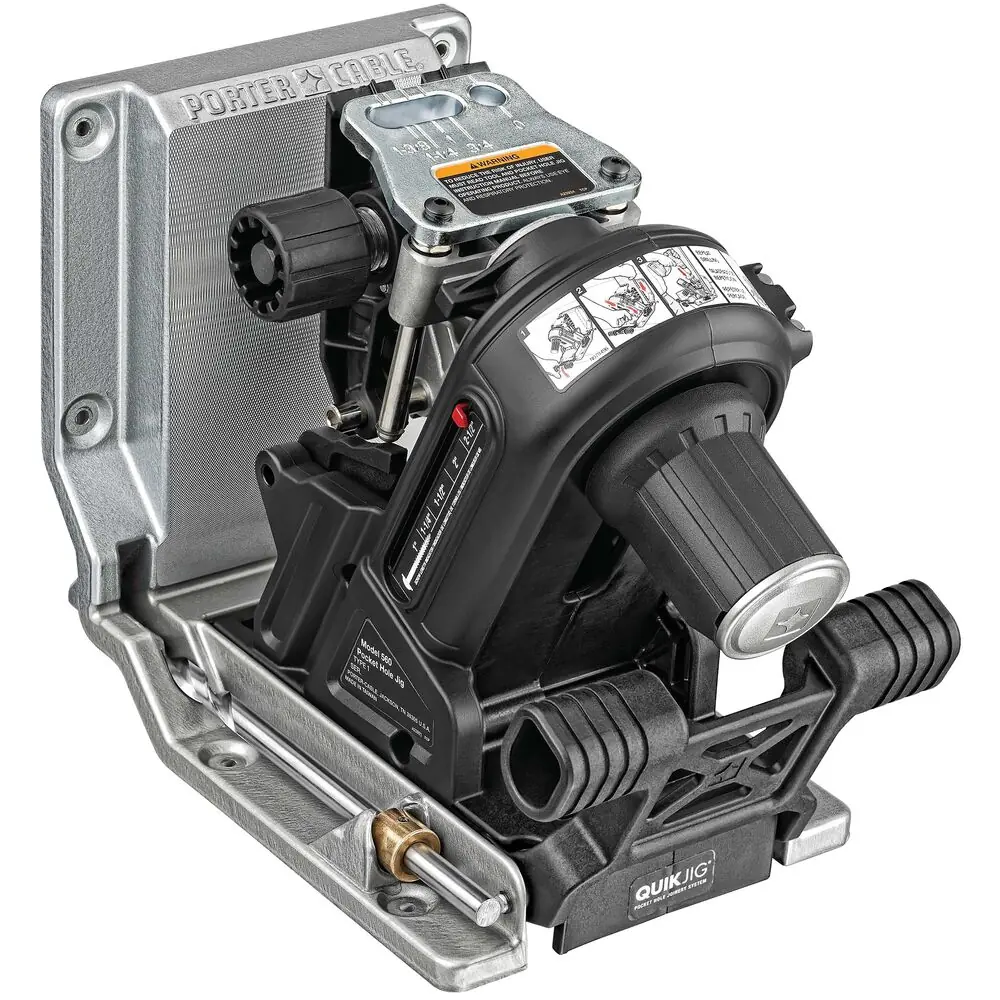
Brand: PORTER-CABLE
Model: 560 PN: N086416
Description: QUICKJIG™ Pocket Hole Joinery System
Disclosure: This review may contain affiliate links. If you make a purchase through one, I may earn a small commission at no additional cost to you.
Advertisement:


First Impressions at a Glance
Evaluation Area
My Initial Assessment
Packaging & Presentation
Accessories & Included Items
Build & Quality
Documentation & Instructions
Setup & Installation
Design & Function
Ease of Use
Features & Capabilities
Performance
Safety Considerations
Overall First Impression
*See How I Review Products for an explanation of my evaluation system.
When I first receive and begin using a product, I detail that initial experience through a First Impression at a Glance evaluation. This gives you a quick look at what I observed during the early stages of ownership, before I have had enough time to judge the product’s long-term performance, reliability, durability, or value.
Purchase Details
Source: eBay
Condition: New
Date: December 2019
Price: $119.
Warranty: None
Always read and follow the manufacturer's operating instructions before using power tools. Wear appropriate personal protective equipment, including ANSI-rated eye protection, hearing protection when required, and any other safety equipment appropriate for the task.
This table gives you a quick snapshot of my initial experience with the product. If you're short on time, this will help you decide if the full review is worth reading.
Sometimes a Tool Changes More Than Your Workflow
When I first became interested in woodworking, I wasn’t trying to become a master cabinetmaker. I wasn’t dreaming of hand-cut dovetails or traditional mortise-and-tenon joinery. What I wanted was a practical way to build useful, high-quality projects for my home without spending years mastering techniques that professional woodworkers often dedicate an entire career to perfecting.
Like many people today, that journey started on YouTube. For weeks, I found myself watching one woodworking video after another. I became fascinated by the maker movement and ordinary people building cabinets, furniture, shelving, workbenches, and countless other projects with tools that were actually within my reach as an average homeowner. The more I watched, the more one question kept coming to mind: “Why am I not doing this?“
I’ve always been fairly self-reliant. Learning new skills has never intimidated me, especially when those skills have practical value. Woodworking seemed like the perfect hobby because every project taught something new while also producing something useful.
One technique kept appearing over and over again in those videos: pocket-hole joinery.
The concept immediately appealed to me. Instead of relying on complicated traditional joinery methods that require specialized tools and years of practice, pocket holes offered a much more approachable way to build strong, accurate assemblies. Combined with wood glue, pocket screws create joints that are remarkably durable while remaining accessible to beginners.
That was exactly the kind of woodworking I wanted to learn.
I wasn’t looking for shortcuts because I was lazy. I was looking for techniques that would let me spend more time building projects and less time struggling through an unnecessarily steep learning curve.
That search eventually led me to the PORTER-CABLE QUICKJIG™ Pocket Hole Joinery System.
Looking Beyond the Usual Choices
Once I decided I wanted a pocket-hole system, I started researching nearly everything available. That turned into far more research than I expected. I looked at inexpensive jigs from Amazon and Harbor Freight. I considered several popular Kreg and Rockler models. I even spent time reading about high-end professional systems like the Castle Pocket Cutter Machine.
Every product seemed to have its own strengths, compromises, and workflow. Eventually I established two priorities. First, I wanted something that produced consistent, accurate pocket holes. Second, I wanted a workflow that was simple enough that I’d actually enjoy using it.
After comparing everything I could find, I settled on the PORTER-CABLE QUICKJIG™.
Ironically, actually finding one became harder than deciding to buy it. Every retailer I checked showed it out of stock. Eventually I found a brand-new unit on eBay for a slight discount and ordered it before someone else could. Within about a month, nearly every retailer had marked the QUICKJIG as discontinued.
To this day, I still don’t understand why. Sometimes excellent products disappear from the market for reasons that have nothing to do with their quality. This feels like one of those cases.
First Impressions: Built Like It Was Meant to Last
Opening the box immediately reinforced the impression that this wasn’t an inexpensive consumer-grade jig. The packaging itself was substantial. Heavy cardboard, molded foam inserts, protective plastic wrapping, and a generous coating of oil covered the aluminum components to prevent corrosion during storage.
Once I picked the jig up, I immediately noticed how solid it felt. Most of the body is aluminum, and nothing about it feels flimsy or cheaply manufactured. The machining looked excellent, the tolerances were tight, and everything fit together exactly the way it should.
There wasn’t any assembly required. There wasn’t really any setup required either. It was essentially ready to go right out of the box.
Although there is a short learning curve to pocket-hole joinery in general, I had unknowingly completed most of that education simply by watching countless woodworking videos before buying the jig. I’d already seen experienced woodworkers demonstrate both the correct and incorrect ways to use similar systems, so using the QUICKJIG felt familiar almost immediately.
From my very first impression, I honestly believed I had made a good investment. Years later, I still feel exactly the same way.
A Surprisingly Elegant Design
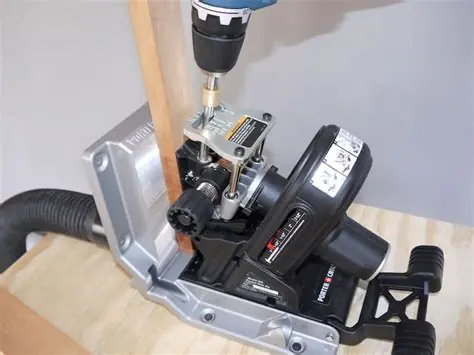
One of the things I appreciate most about this jig is how uncomplicated it is. There aren’t dozens of adjustments to make. There aren’t complicated mechanisms to learn. In fact, there are only a couple of moving parts, and both are essentially self-adjusting.
Using it is about as straightforward as woodworking gets. Place the board in the jig. Clamp it. Insert the proprietary drill bit. Drill until the built-in depth stop prevents you from going too far. That’s it. Sometimes the best engineering isn’t about adding features. It’s about removing everything that isn’t necessary.
The QUICKJIG feels like one of those products. Every part serves a purpose, and nothing feels over-engineered just for the sake of appearing sophisticated. That simplicity also contributes directly to its consistency. Every pocket hole comes out nearly identical to the last one, allowing me to focus on building instead of constantly checking measurements or second-guessing the jig.
Real-World Performance
One thing that’s difficult to explain until you’ve actually used a good pocket-hole jig is just how much it can change your confidence as a woodworker.
Traditional joinery certainly has its place, and I genuinely admire people who have mastered techniques like dovetails and mortise-and-tenon joints. Those methods produce beautiful craftsmanship, but they also demand considerable time, practice, and patience before they become second nature.
Pocket-hole joinery takes a different approach.
Instead of spending years learning how to produce perfect joints by hand, you can begin building attractive, functional projects almost immediately. That doesn’t make it “cheating”, it simply lowers the barrier to entry while still producing strong, reliable results. For someone teaching himself woodworking, that was exactly what I needed.
Although I can’t remember the very first project I used the QUICKJIG on, I do remember how quickly it became part of my normal workflow. Rather than worrying whether my joints would line up correctly, I could concentrate on designing and building the project itself. That shift in focus made woodworking significantly more enjoyable. The jig never became the center of attention. Instead, it quietly did its job every single time I needed it, which is probably the highest compliment I can give any tool.
Long-Term Product Evaluation at a Glance
Evaluation Area
Year 1
Year 2-3
Year 5
Overall Performance
Build Quality & Durability
Reliability
Ease of Use
Features & Functionality
Long-Term Experience
Value Over Time
*See How I Review Products for an explanation of my evaluation system.
These categories represent the key areas I focus on when evaluating product longevity. Each one plays a role in determining my overall long-term satisfaction.
Consistency You Can Depend On
Over the years, I’ve used quite a few tools that work well most of the time. This isn’t one of those. The QUICKJIG is remarkably consistent. If the material is properly positioned and clamped, the resulting pocket hole is clean, accurately positioned, and ready for assembly. I never found myself wondering whether this particular hole would come out differently than the previous one. That’s important because consistency builds confidence.
When you’re making multiple cabinet parts or assembling furniture, the last thing you want is to question whether your jig is introducing small errors that will eventually compound into larger problems. The QUICKJIG simply doesn’t behave that way. It produces repeatable results over and over again. Of course, there is one variable that eventually changes the quality of the pocket holes, and it isn’t the jig itself.
It’s the drill bit.
Like any cutting tool, the proprietary drill bit gradually becomes dull with use. As that happens, you’ll begin to notice the pocket holes lose some of their crisp, clean appearance. The degradation happens slowly enough that you can actually watch it develop over time. The jig isn’t becoming less accurate. The cutting tool is simply wearing out, exactly as you’d expect.
That’s normal maintenance, not a flaw in the system.
The Only Weak Link
Ironically, the strongest criticism I have of the QUICKJIG isn’t really directed at the jig itself. It’s the proprietary drill bit.
To function correctly, the system requires PORTER-CABLE’s specially designed stepped drill bit. It simultaneously drills the pilot hole and creates the pocket for the screw head while also accepting an adjustable depth stop on a machined flat section of the shaft. It’s an excellent design. Unfortunately, it also creates a single point of failure.
If you accidentally drop that bit onto a concrete floor, or knock your drill off the workbench while the bit is installed, there’s a very good chance you’ll snap the tip off. Once that happens, you’re finished until you find another replacement bit.
Normally that wouldn’t concern me. Replacement bits are consumables, and consumables can be purchased. Except this product was discontinued. The moment I realized PORTER-CABLE had abandoned the QUICKJIG, I immediately started searching for replacement drill bits anywhere I could find them. I managed to collect somewhere around eight spare bits before they largely disappeared from retailers.
That small collection has become my insurance policy. As long as I’m careful not to damage them, I should be able to keep using this jig for many years. If I ever exhaust that supply, replacing the jig becomes a much more complicated problem than replacing a worn drill bit. That’s unfortunate because the jig itself shows no signs of wearing out.
Rock-Solid Reliability
In more than five years of ownership, the QUICKJIG has never given me a reason to doubt it. Nothing has loosened. Nothing has gone out of adjustment. Nothing has broken.
The performance today is essentially identical to what I experienced when I first took it out of the box. That’s exactly what I want from a stationary shop jig. Unlike cordless tools that contain batteries, electronics, motors, and switches, a well-designed woodworking jig should simply continue working year after year with very little attention. That’s been my experience here.
In fact, I honestly think the biggest threat to this tool would be accidentally dropping it onto the concrete floor of my workshop. Short of that, I expect it to outlast me.
Maintenance has been almost nonexistent beyond normal care in defending against Florida’s humidity and hand sharping drill bits as they wear. There have been no unexpected repairs, adjustments, or reliability concerns. It simply works whenever I need it.
That’s become one of its defining characteristics.
How It Changed My Woodworking
Some tools help you complete a project. Other tools quietly change how you approach every future project. The QUICKJIG falls into the second category.
As I became more comfortable using it, I found myself naturally designing projects around pocket-hole construction. It wasn’t because I lacked other options, it was because the workflow was so efficient, predictable, and repeatable. Instead of worrying about complicated joinery, I could spend my time thinking about material selection, layout, and overall design. The jig removed unnecessary friction from my building process.
Looking back, many of the woodworking techniques and habits I’ve developed over the years were influenced by this single tool. It became more than just another jig sitting on a shelf. It shaped how I work in my shop. That’s probably the biggest compliment I can give it. Very few tools actually enhance your workflow. This one did.
Final Thoughts
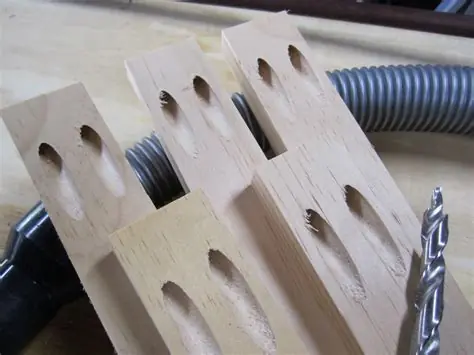
After several years of ownership, my opinion of the PORTER-CABLE QUICKJIG has only improved. It’s one of those rare tools that quietly earns its place in the workshop by doing exactly what it’s supposed to do every single time. It doesn’t require constant adjustments, it hasn’t developed any reliability issues, and it consistently produces clean, accurate pocket holes with very little effort. That’s exactly what I hoped for when I bought it, and it has delivered on that expectation ever since. More importantly, it allowed me to spend less time worrying about joinery and more time building projects, which is ultimately what woodworking should be about.
The greatest disappointment isn’t the jig itself, it’s PORTER-CABLE’s decision to discontinue it. Even after years of ownership, I still don’t understand that decision. In my opinion, they discontinued one of the best-designed pocket-hole jigs available. Its simple operation, excellent build quality, and consistently accurate results made it stand out from nearly everything else I considered before making my purchase.
That said, owning one today comes with an important caveat. The proprietary stepped drill bit is essential to the system, and replacement bits have become increasingly difficult to find. Knowing this, I purchased several spare bits before they disappeared from the market. As long as I take care of them, I expect this jig to remain part of my workshop for many years. If you happen to find a complete QUICKJIG on the used market, make sure it includes the original drill bit and accessories. Without them, the value of the system drops considerably.
If mine disappeared tomorrow, I’d immediately begin searching for another one. Unfortunately, because PORTER-CABLE discontinued the QUICKJIG, replacing it wouldn’t be nearly as simple as buying a new one off the shelf.
Without hesitation.
- DIY-er's
- Woodworkers
- Makers
- Hobbyist

