Motorola XTS Series Digital Portable Radio
Technical articles, guides and resources for communication hobbyists...
Home |
The Motorola XTS Series Digital Portable Radio are widely recognized as a reliable, mission-critical communication tool for public safety professionals. Known for their ruggedness and advanced features, these radios are designed to meet the demanding needs of first responders, law enforcement, and now Ham Radio Operates. They offer clear, secure communication and the interoperability required to communicate reliably.
This affordability, coupled with Motorola’s renowned durability and reliable performance, has attracted a new user base. Many Amateur Radio Hobbyist & Motorola Enthusiasts like myself utilize the Motorola XTS Series Digital Portable Radio within the amateur communications hobby, including participation in organizations like SKYWARN and the Radio Amateur Civil Emergency Service. These radios offer features that appeal to this community, such as their robust construction, clear audio capabilities, and the option for digital and analog modes of operation, depending on the radio’s configuration.
A Brief History of the Motorola XTS Series Digital Portable Radio
The Motorola XTS Series Digital Portable Radio are designed for tough, demanding environments. Built to military standards (MIL-STD-810G), they can withstand harsh conditions, including shock, vibration, dust, and water. The radios feature high-quality audio performance, even in noisy, chaotic environments. The XTS 5000 Digital Portable Radio is also part of Motorola’s ASTRO 25 platform, offering secure, encrypted communication. Additionally, they support both analog and digital modes, providing flexibility and ensuring interoperability between different agencies and jurisdictions during emergencies. The radios are also equipped with advanced features like GPS, text messaging, and programmable buttons for enhanced functionality.
The XTS first went into production in the early 2000’s. At the time, they represented a major leap forward in public safety communications, as they were among the first to incorporate digital trunking, secure encryption, and interoperability with other agencies. The Motorola XTS Series Digital Portable Radio played a key role in the transition from analog to digital systems, offering agencies a reliable solution for mission-critical communications.
Production of the Motorola XTS Series Digital Portable Radio ended in 2014 as Motorola introduced newer models with more advanced features and capabilities. However, many agencies still rely on these radios due to their proven performance and durability.
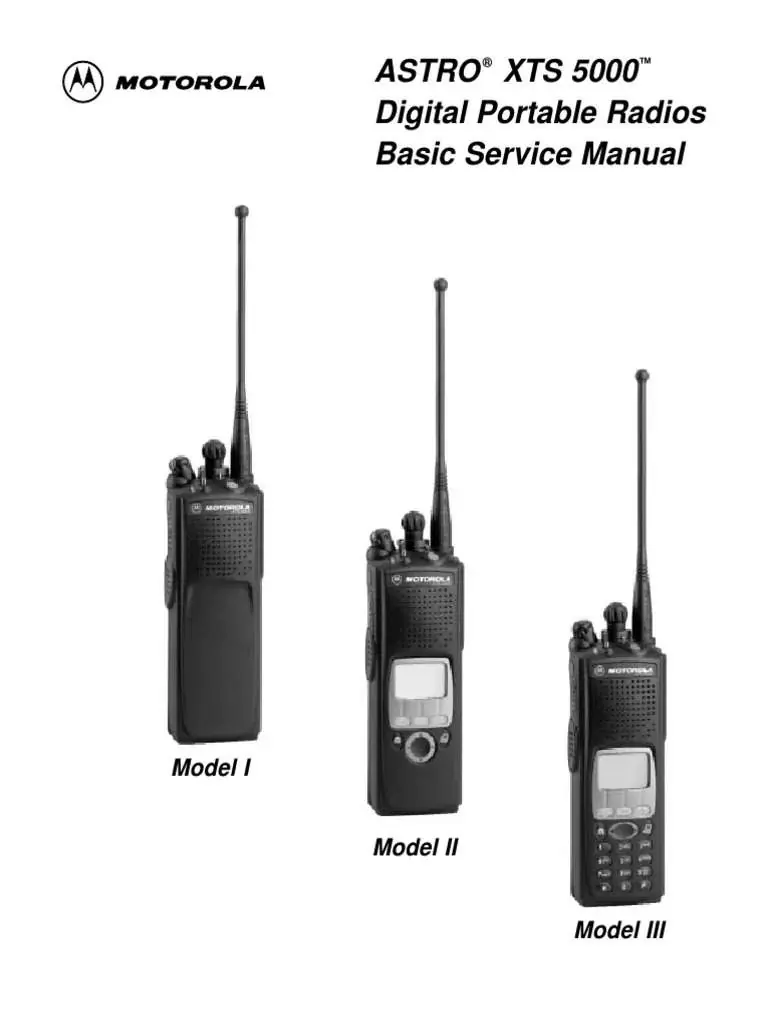
The Motorola XTS Series Digital Portable Radio included three models, such as the 1500, 2500 and 5000 handheld, with different configurations for Model I, II and III. These radios were designed to meet various operational needs, offering a range of features such as trunking capabilities, secure communications, and customization options for VHF, UHF and 700-800mhz bands.
The Motorola XTS Series Digital Portable Radio have set the standard for reliable, mission-critical communication and continue to be trusted by public safety professionals worldwide.
Not all downloads on this page are available to every visitor.
Learn how download access and indicators work.
Marketing Materials
Type: PDF | Version: R3-4-2002D | Size: 299.5 KB
Type: PDF | Version: R3-4-2009F | Size: 91.0 KB
Type: PDF | Version: R3-1-2011A | Size: 16.3 KB
User Guides & Manuals
Type: PDF | Version: Unknown | Size: 248.6 KB
Type: PDF | Version: 6881093C13-A | Size: 474.4 KB
Type: PDF | Version: 6881094C27-L | Size: 13.2 MB
Service Bulletins, Guides & Manuals
Type: PDF | Version: R3-4-2005 | Size: 37.0 KB
Type: PDF | Version: 6881094C31-D | Size: 110.0 MB
Type: PDF | Version: 6881094C31-C | Size: 110.0 MB
Type: PDF | Version: 6881094C31-C | Size: 110.0 MB
Firmware
It seems we can’t find what your looking for.
Codeplugs
It seems we can’t find what your looking for.
Software
Type: ZIP | Version: R.20.01.00 | Size: 643.4 MB
Type: ZIP | Version: R.20.01.00 | Size: 5.2 MB
Type: ZIP | Version: R.15.00.00 | Size: 147.1 MB
Type: ZIP | Version: R.2.00.00 | Size: 24.8 MB
Links
Product Info: XTS 5000 Digital Portable Radio (Discontinued)
Frequently Asked Questions
What should I check before buying a used XTS radio?
Before purchasing a used XTS unit, verify:
- Model (1500, 2500, or 5000)
- Frequency band (VHF/UHF/700/800 MHz)
- Battery condition and availability
- Flashcode feature set
- Physical wear (antenna mount, keypad, display if applicable)
- Programming compatibility with available CPS versions
What is the Motorola XTS Series used for?
The Motorola XTS Series is a line of professional portable (handheld) two-way radios designed primarily for public safety, emergency services, and field communications. These radios are built for rugged outdoor use and support both analog FM and APCO Project 25 (P25) digital operation depending on configuration.
What makes Motorola XTS radios different from mobile radios?
TS radios are handheld portable units, meaning they operate on internal batteries and are designed for mobility in the field. Unlike mobile radios that are installed in vehicles, XTS units are carried by users and built for on-person communication in demanding environments.
Which Motorola XTS models are most common?
The most widely used models in the XTS Series include:
XTS1500 (entry-level portable P25 radio)
XTS2500 (mid-tier portable with expanded features)
XTS5000 (high-end portable with advanced options, including encryption and display/keypad configurations)
Each model varies in feature capacity, firmware support, and accessory compatibility.
How long does an XTS radio battery typically last?
Battery life depends on capacity, usage, and transmit power settings. Standard XTS battery packs can last a full work shift under moderate use, while high-capacity lithium-ion batteries can extend runtime for extended field operations. Digital P25 operation and high transmit duty cycles will reduce overall battery life.
What types of batteries are used in Motorola XTS radios?
XTS radios commonly use rechargeable NiMH or lithium-ion battery packs. Lithium-ion batteries are preferred for longer runtime and lighter weight. Battery compatibility depends on the specific XTS model and housing design.
Can Motorola XTS radios be used in harsh outdoor environments?
Yes. The XTS Series is designed for rugged field use and typically meets military and public safety durability standards. They are resistant to dust, shock, vibration, and moisture, making them suitable for emergency response and outdoor operations
What accessories are available for XTS handheld radios?
Common XTS portable accessories include:
Speaker microphones for hands-free operation
Belt clips and carrying cases
Surveillance earpieces and covert audio kits
High-capacity batteries
Desktop and rapid-rate chargers
Replacement antennas for different frequency bands
Accessory selection depends on the specific XTS model and frequency range.
How are Motorola XTS radios programmed?
XTS radios are programmed using Motorola ASTRO 25 Customer Programming Software (CPS). Programming is typically performed via a compatible programming cable and requires correct software version matching the radio firmware.
What is a flashcode in an XTS radio?
A flashcode is a configuration identifier that defines which features are enabled in the radio. This may include P25 digital capability, encryption options, trunking support, and other advanced system features. Flashcodes determine the functional limits of a specific XTS unit.
Can XTS radios operate in both analog and digital modes?
Yes. Many XTS radios support mixed-mode operation, allowing them to communicate on both analog FM systems and P25 digital systems, depending on system configuration and programming.
Are Motorola XTS radios still supported?
Motorola has discontinued the XTS Series in favor of newer platforms such as the APX Series. However, XTS radios are still widely used in legacy systems, amateur radio environments, and surplus markets where replacement and maintenance are still feasible.
Can XTS radios be used for amateur radio (ham radio)?
Yes. Licensed amateur radio operators often use XTS radios on authorized amateur frequencies where legally permitted. Their durability and audio quality make them popular among hobbyists, though programming complexity and firmware restrictions should be considered.
What frequency bands do XTS radios cover?
XTS radios were manufactured in multiple bands, including VHF, UHF, and 700/800 MHz. Each radio is band-specific, and operation is limited to the hardware’s designed frequency range.
How do I identify the features installed in an XTS radio?
Installed features can be identified using the radio’s model number, firmware information, and flashcode. These elements determine supported capabilities such as encryption, digital mode, trunking, and accessory functionality.
Can XTS radios be upgraded with new features?
Some feature upgrades may be possible through authorized programming tools and firmware updates, but most capabilities are determined at the factory via flashcode configuration. Major feature expansion is typically limited on legacy XTS hardware.
What is the main advantage of XTS portable radios today?
The main advantage is durable field reliability combined with proven P25 performance. Even though they are legacy systems, XTS radios remain valued for their rugged construction, strong audio clarity, and continued compatibility with many existing public safety and amateur radio systems.

