Home |
My honest opinion based on personal experience, hands-on use and long-term ownership.
Brand: RIDGID
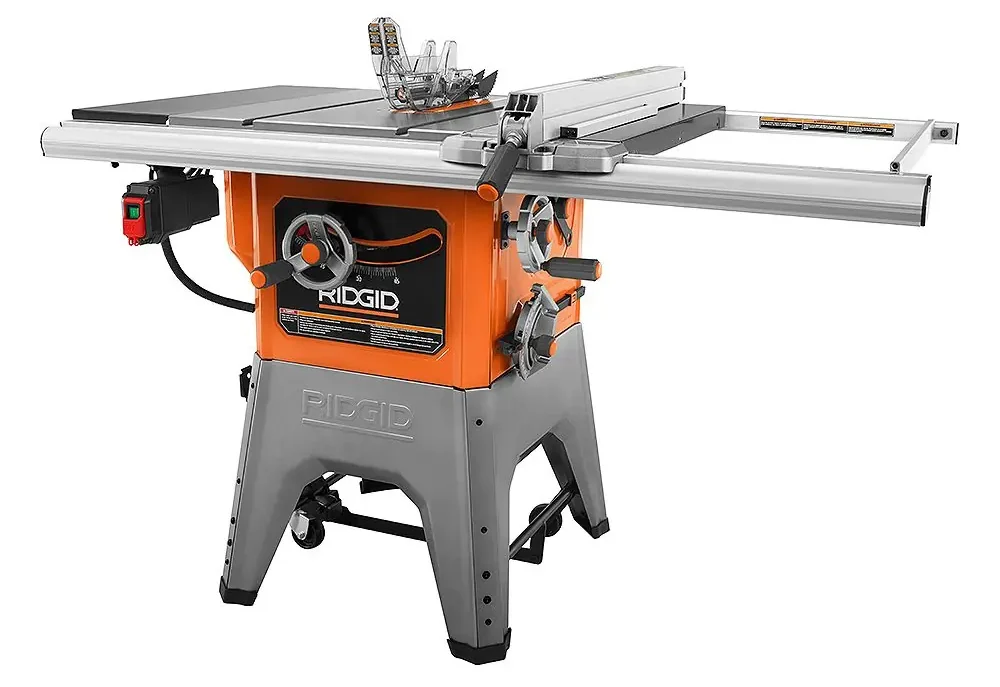
Model: R4512
Description: 10″ Table Saw
Disclosure: This review may contain affiliate links. If you make a purchase through one, I may earn a small commission at no additional cost to you.
Advertisement:


First Impressions at a Glance
Evaluation Area
My Initial Assessment
Packaging & Presentation
Accessories & Included Items
Build & Quality
Documentation & Instructions
Setup & Installation
Design & Function
Ease of Use
Features & Capabilities
Performance
Connectivity
Safety Considerations
Overall First Impression
*See How I Review Products for an explanation of my evaluation system.
When I first receive and begin using a product, I detail that initial experience through a First Impression at a Glance evaluation. This gives you a quick look at what I observed during the early stages of ownership, before I have had enough time to judge the product’s long-term performance, reliability, durability, or value.
Purchase Details
Source: Direct Tools Factory Outlet
Condition: Blemished
Date: November 2017
Price: $395.
Warranty: Lifetime Service Agreement
Always read and follow the manufacturer's operating instructions before using power tools. Wear appropriate personal protective equipment, including ANSI-rated eye protection, hearing protection when required, and any other safety equipment appropriate for the task.
This table gives you a quick snapshot of my initial experience with the product. If you're short on time, this will help you decide if the full review is worth reading.
RIDGID R4512 10-Inch Table Saw Review: Five Years Later, Would I Still Buy It?
When I first decided to get into woodworking, I quickly learned that the table saw is the centerpiece of almost every shop. Everything else seems to revolve around it. The problem was that I was building an entire workshop from scratch, and like most beginners, I had a limited budget. I needed a saw that could help me learn the craft without requiring the kind of investment that professional cabinet makers make.
The RIDGID R4512 was the final major purchase in my initial woodworking shop build-out. Along with my Ridgid R8611503 2-Speed Hammer Drill, RIDGID R86035 Impact Driver, and RIDGID R8652 Brushless 7-1/4″ Circular Saw, it became the foundation of a workshop that would teach me far more than I expected, not only about woodworking, but also about buying tools, setting realistic expectations, and working safely.
After more than five years of ownership, I have a pretty clear understanding of where the R4512 excels, where it falls short, and who should, and shouldn’t buy one.
Why I Bought the RIDGID R4512
Like nearly every other tool I purchased during that period, I found this saw at Direct Tools Factory Outlet. It was being sold as a blemished unit, which generally means it has cosmetic imperfections that prevent it from being sold through traditional retail channels.
Before purchasing it, the salesperson and I opened the box right there in the showroom to inspect it. The only blemish either of us could find was a small rust spot on the cast iron tabletop. It appeared that the shipping carton had been damaged by a forklift at some point, allowing moisture to drip onto the cast iron surface during storage.
Normally that might have worried me, but the discount certainly didn’t.
There were nearly a dozen of these saws stacked on clearance for only $395, roughly half of what the saw typically sold for through the big box stores. At that price, it was simply too good of an opportunity to ignore.
The rust spot eventually cleaned up with nothing more than WD-40, a green Scotch-Brite pad, and a little patience. Today it’s almost impossible to tell it was ever there.
Looking at the Competition
Before buying the RIDGID R4512, I spent quite a bit of time researching alternatives. Like many new woodworkers, I looked at offerings from Delta, Jet, Powermatic, Grizzly, Shop Fox, SawStop, and several others.
The more I researched, the more I realized something interesting. The RIDGID R4512 really occupies a category almost by itself. Most table saws in its price range are contractor saws with open stands. The RIDGID R4512, on the other hand, is marketed as a budget cabinet saw. It gives you many of the advantages of a cabinet-style design without entering professional pricing.
The problem is that once you move beyond the R4512, pricing climbs dramatically. The cabinet saws I truly wanted generally started around two to three thousand dollars. Those are wonderful machines, but they’re designed for serious cabinet shops, production work, and experienced craftsmen. For someone just entering the hobby, spending several thousand dollars on a table saw simply didn’t make financial sense.
Woodworking is a hobby for me, not a business. If I were earning money building furniture, justifying that investment would be much easier. At the time, however, I needed something that offered good value while allowing me to develop my skills.
The RIDGID R4512 fit that role perfectly.
I Expected Compromises
Even before opening the box, I already knew the R4512 wasn’t perfect. My research uncovered plenty of online discussions about its shortcomings, particularly concerning fence alignment and overall precision compared to higher-end cabinet saws. The difference was that I understood those compromises before buying it. That’s important.
There’s a big difference between buying an inexpensive tool expecting perfection and buying one with realistic expectations. I knew exactly what I was paying for. I also knew many of the common issues had reasonable workarounds if I was willing to spend a little extra time during setup and alignment.
Instead of expecting a professional-grade cabinet saw for four hundred dallors, I expected an affordable machine that would let me learn woodworking. That’s exactly what I got.
Assembly Is Not a One-Person Job
One thing prospective buyers should understand immediately is that the RIDGID R4512 requires a substantial amount of assembly.
The motor, cabinet, and cast iron top come preassembled, but that’s also the heaviest portion of the saw. You’ll still need to install the extension wings, leg assemblies, dust chute, mobile caster system, fence rails, hand wheels, and numerous smaller components.
Much of this work is performed with the saw upside down. Once you’ve finished that stage, you’ll need to rotate the nearly completed saw upright. Remember, this machine weighs roughly 400 pounds.
This is absolutely not a one-person operation. Get help.
Once the saw is upright, assembly continues with the remaining components before moving on to the most important part of the entire process, alignment.
Proper blade alignment, fence alignment, and rail adjustments determine how accurately the saw will cut. I spent nearly another hour making careful adjustments before ever making my first cut, and I don’t regret that decision. Taking extra time during setup pays dividends for years afterward.
My First Modification Happened Immediately
Ironically, the first real woodworking project I completed with the R4512 was modifying the R4512 itself. The factory extension tables are only about twelve inches wide. While functional, I wanted more workspace and eventually planned to integrate a router table into the saw.
Rather than spending more money on aftermarket cast iron extensions which cost nearly as much as the saw itself, I built my own full-length plywood extensions.
That modification allowed me to install a router lift directly into the right side of the saw, creating a combination table saw and router station while saving valuable shop space. It’s a fairly common modification among hobby woodworkers, and it has served me well ever since. More than five years later, the saw is still configured exactly that way.
Learning the Saw - and Learning Woodworking
Owning a table saw isn’t just about learning how to operate the machine. It’s about learning how to think differently.
Before making my first cut, I spent considerable time watching instructional videos, studying safe operating procedures, and mentally rehearsing every step of the cut before turning the saw on.
I would literally visualize where my hands would be.
Where they shouldn’t be.
How the workpiece would move.
How I would support it throughout the cut.
That mental preparation became every bit as important as learning how to adjust the fence. The table saw quickly taught me that confidence should never replace caution. If something doesn’t feel right before making a cut, stop. Reevaluate, and reset. Wood will always wait.
Living With the Fence
If there’s one weakness most owners eventually discuss, it’s the rip fence. Over time, I experienced exactly what many online reviews described. The fence doesn’t always stay perfectly parallel with the blade. Sometimes the front and rear measurements don’t quite agree, even after adjustment. From what I’ve read, much of this appears related to the plastic clamping components that wear over time and change slightly with temperature.
Instead of becoming frustrated, I simply adjusted my workflow. Before making important cuts, I verify fence position with a tape measure. Yes, it’s an extra step. But context matters.
I’m comparing a $400 cabinet-style saw against machines costing several thousand dollars. Spending a few extra seconds confirming alignment seems like a perfectly reasonable trade-off considering what I paid. Rather than expecting premium precision at a bargain price, I’ve learned to work within the saw’s capabilities. In return, it’s continued producing dependable results for years.
Long-Term Product Evaluation at a Glance
Evaluation Area
Year 1
Year 2-3
Year 5
Overall Performance
Build Quality & Durability
Reliability
Ease of Use
Features & Functionality
Long-Term Experience
Value Over Time
*See How I Review Products for an explanation of my evaluation system.
These categories represent the key areas I focus on when evaluating product longevity. Each one plays a role in determining my overall long-term satisfaction.
The Lesson That Changed Everything
About two years into owning the RIDGID R4512, I learned the most valuable lesson this saw has ever taught me. It had nothing to do with accuracy, power, or woodworking techniques. It had everything to do with complacency.
I had become comfortable using the saw. Too comfortable. Like many repetitive tasks, woodworking can become routine after you’ve made hundreds of successful cuts. That’s when it’s easiest to let your guard down, rush a cut, or convince yourself that taking a shortcut “just this once” won’t matter. It does.
I was moving faster than I should have been and wasn’t using the safety equipment as intended. Before I realized what had happened, my thumb had contacted the blade.
As a former paramedic, I was fortunate enough to stay calm and objectively assess my injury rather than panic. The result was a laceration roughly an inch long and slightly over one-eighth of an inch deep across the pad of my thumb. It required emergency medical treatment and several stitches.
It could have been much worse. I could have lost part or all of my thumb. I want to be very clear about something. This was not the fault of the RIDGID R4512.
The saw performed exactly as it was designed to. I was the one who failed to maintain safe operating practices. I became complacent, rushed the cut, and ignored the safety mindset that I had worked so hard to develop when I first started woodworking. That experience permanently changed the way I work.
Today, I consciously slow myself down before every cut. If something doesn’t feel right, I stop and rethink the entire operation. No project is important enough to risk another injury.
If there’s one lesson I hope new woodworkers take from this review, it’s this: the most dangerous moment isn’t usually your first day with a table saw. It’s the day you become comfortable enough to think you don’t need to respect it anymore.
Five Years Later: How Has It Held Up?
Mechanically, the RIDGID R4512 has been remarkably dependable. Other than periodically checking alignment and making small adjustments, the saw has required very little attention. The motor still runs as it did when it was new, and none of the major components have given me any reason to question their durability. The adjustments I make today are generally the same adjustments I’d expect to make on almost any table saw.
Temperature changes affect metal. Humidity affects metal. My saw also sits in the middle of my workshop, where it occasionally doubles as additional work surface when it’s not in use. Bumping the fence or leaning materials against the saw can knock things slightly out of alignment. That’s simply part of owning a precision woodworking machine. I’ve never considered those periodic tune-ups to be defects. They’re routine maintenance.
The one issue that continues to require attention is the rip fence. Even after all these years, it still benefits from checking its alignment before making precision cuts. Fortunately, that has become second nature. Verifying the fence with a tape measure only adds a few seconds to my workflow and gives me confidence that the cut will be accurate. Considering what I originally paid for the saw, that’s a compromise I’m perfectly willing to accept.
A Saw That Grew With Me
One of the more interesting realizations I’ve had over the past five years is that the saw hasn’t really changed. I have.
When I bought the RIDGID R4512, it was exactly the machine I needed. It allowed me to learn fundamental woodworking skills without making an enormous financial commitment.
As my experience grew, so did my expectations.
Today I notice limitations that probably wouldn’t have mattered to me as a beginner. My standards for precision have improved, my techniques have improved, and I understand what professional-grade machinery offers.
That doesn’t mean the R4512 became a worse saw. It means I became a better woodworker. I think that’s an important distinction because many hobbyists eventually reach the same point. You don’t necessarily replace a starter tool because it failed. Sometimes you replace it simply because your skills have outgrown what that tool was designed to provide.
That’s exactly where I find myself today. If I had the budget, I would absolutely upgrade to a professional cabinet saw. Not because the RIDGID has let me down, but because I now appreciate the refinements that come with machines costing several times more.
Who Is This Saw Really For?
After living with the RIDGID R4512 for more than five years, I don’t think it’s a table saw for everyone.
For the average homeowner who only needs to rip a few boards each year or complete occasional DIY projects, this is probably more machine than necessary. A quality jobsite saw would likely make more sense while taking up less space.
For experienced cabinet makers and professional furniture builders, I’d also look elsewhere. If your livelihood depends on maximum precision, production speed, and premium fit and finish, you’ll probably become frustrated with the compromises required by the RIDGID R4512.
Where this saw truly shines is with aspiring woodworkers. If you’re serious about learning the craft, building furniture, and developing your skills over several years, I think this remains one of the best values in woodworking. It provides the feel of a cabinet-style saw without demanding the investment required for a premium professional machine.
Eventually, you may outgrow it. That’s perfectly okay. In many ways, that’s exactly what it’s designed to do.
Final Thoughts
Looking back, the RIDGID R4512 accomplished exactly what I hoped it would. It gave me an affordable entry into woodworking, helped me develop my skills, and proved reliable through years of real-world use and many of my home remodeling projects. Along the way it also taught me valuable lessons about setup, precision, patience, and, most importantly, safety.
It isn’t a perfect table saw, nor does it pretend to be. The fence requires occasional attention, the motor isn’t intended for production work, and anyone expecting the refinement of a multi-thousand-dollar cabinet saw will be disappointed. But judging it against machines three to six times its price misses the point.
The R4512 was designed to be an affordable cabinet-style saw for hobbyists, and in that role I believe it succeeds exceptionally well. If you’re committed to learning woodworking but aren’t ready to invest in a professional-grade machine, this saw provides an excellent balance between capability and cost. When your skills eventually exceed its limitations, you’ll likely be in a much better position to justify the investment in your dream saw.
Would I love to begin with a premium SawStop or Powermatic cabinet saw? Absolutely. Would I recommend most beginners spend several thousand dollars before they even know whether they’ll stick with the hobby? Probably not.
The R4512 occupies a sweet spot that’s becoming increasingly difficult to find. It offers far more capability than a typical contractor or jobsite saw while remaining financially attainable for serious hobbyists.
Even if woodworking doesn’t become a lifelong hobby, a well-maintained R4512 retains enough value on the used market that you can usually recover much of your investment. If it does become a passion, the skills you develop on this saw will transfer directly to whatever professional cabinet saw you eventually upgrade to.
For me, that’s exactly what a great starter tool should do.
If I found myself starting woodworking over again with the same budget constraints, I would buy the RIDGID R4512 without hesitation.
Without hesitation.
- Inspiring Woodworker
- DIY Home Owners
- Professional Craftsman