Home |
My honest opinion based on personal experience, hands-on use and long-term ownership.
Brand: RIDGID
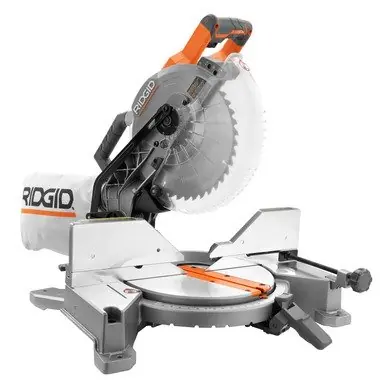
Model: R41121
Description: 10 in. Compound Miter Saw
Disclosure: This review may contain affiliate links. If you make a purchase through one, I may earn a small commission at no additional cost to you.
Advertisement:


First Impressions at a Glance
Evaluation Area
My Initial Assessment
Packaging & Presentation
Accessories & Included Items
Build & Quality
Documentation & Instructions
Setup & Installation
Design & Function
Ease of Use
Features & Capabilities
Performance
Safety Considerations
Overall First Impression
*See How I Review Products for an explanation of my evaluation system.
When I first receive and begin using a product, I detail that initial experience through a First Impression at a Glance evaluation. This gives you a quick look at what I observed during the early stages of ownership, before I have had enough time to judge the product’s long-term performance, reliability, durability, or value.
Purchase Details
Source: Direct Tools Factory Outlet
Condition: New
Date: November 2018
Price: $145.
Warranty: Lifetime Service Agreement
Always read and follow the manufacturer's operating instructions before using power tools. Wear appropriate personal protective equipment, including ANSI-rated eye protection, hearing protection when required, and any other safety equipment appropriate for the task.
This table gives you a quick snapshot of my initial experience with the product. If you're short on time, this will help you decide if the full review is worth reading.
A Reliable Shop Workhorse That Also Taught Me an Expensive Lesson
When I first started building my dedicated home woodworking shop, I spent countless hours watching YouTube videos of experienced woodworkers. Like most beginners, I tried to balance what I wanted with what I could realistically afford. Every purchase felt important because I wasn’t just buying tools, I was investing in a workshop that I hoped would serve me for years.
One of those early purchases was the RIDGID R41121 10-inch Compound Miter Saw with LED. Looking back after more than five years of ownership, I can honestly say the saw has done exactly what it was designed to do. At the same time, it also taught me an important lesson about buying tools based solely on today’s needs instead of considering where my skills and projects might eventually take me.
That makes this review a little different from many you’ll find online. This isn’t the opinion of someone who used the saw for a weekend project or made a handful of cuts before posting a review. It’s based on years of ownership, dozens of projects, and enough experience to understand both where this saw excels and where its limitations eventually become apparent.
Why I Bought the RIDGID R41121
The R41121 wasn’t purchased for one specific project. It was purchased because I was building the foundation of what I hoped would become my long-term woodworking shop. My plan from the beginning was for this saw to become the centerpiece of My Custom Miter Saw Workstation complete with dust collection, storage cabinets, drawers, and dedicated work surfaces. Rather than being a portable jobsite tool, it would become a semi-permanent fixture in my workshop.
My primary goal was simple. I wanted a dependable saw for cutting dimensional lumber such as 2×4’s, 2×6’s, trim, and other materials that are more practical to process on a miter saw than a table saw. It would complement my other tools rather than replace them.
At that point I had already started building a collection of RIDGID tools. Living close to a Direct Tools Factory Outlet made purchasing RIDGID equipment especially attractive because I could often find new, blemished, and factory reconditioned tools at substantial discounts. Staying within one brand simply made financial sense, and this saw fit that strategy perfectly.
Choosing Between the 10-Inch and 12-Inch Models
This was probably the hardest decision I faced during the purchase.
I kept going back and forth between three different RIDGID models:
10-inch dual bevel compound miter saw
12-inch dual bevel compound miter saw
12-inch dual bevel sliding compound miter saw
If I’m honest, I already wanted the 12-inch sliding model. The problem was convincing myself I actually needed it. As someone just getting into woodworking, I kept telling myself that the larger saw was probably overkill for a beginner’s shop. Adding to that, my wife was reminding me that the sliding model cost roughly twice as much as the 10-inch version.
Eventually, practicality won. I convinced myself the smaller saw would be more than enough. Today, after years of ownership, I can confidently say that decision wasn’t wrong, but it also wasn’t the decision I’d make again.
The interesting part is that this wasn’t a failure of the saw. It was a lack of experience on my part. At the time, I simply didn’t know what I didn’t know. I had watched hundreds of woodworking videos, but watching experienced craftsmen and actually building projects are two very different things. Until you begin working with larger material yourself, it’s difficult to appreciate how often additional cutting capacity becomes useful.
First Impressions
One advantage of purchasing through Direct Tools Factory Outlet is that you can usually examine the tools before taking them home. The displays let you handle the equipment, operate the controls, and in many cases even plug the tool in to see how it runs. That experience eliminated most of the uncertainty before I ever left the store.
The store associate even spent time explaining the saw’s adjustments, controls, and basic operating techniques. Looking back, that conversation probably taught me as much as reading the manual did. For someone buying their first miter saw, that kind of assistance was genuinely valuable.
The saw itself arrived well protected with molded Styrofoam packaging, a protective plastic bag, and corrosion-preventative oil covering the exposed metal surfaces. After cleaning everything up and spending some time with the owner’s manual, I checked the blade alignment and miter settings before making any cuts.
This is something I do with every new tool. Even if a tool claims to be factory calibrated, I always verify everything before putting it into service.
To my surprise, the R41121 required almost no adjustment. Had I skipped the inspection, it would have been perfectly usable right out of the box for typical construction work. That gave me confidence that RIDGID’s factory setup was quite good.
Learning to Use a Miter Saw
Interestingly, the learning curve wasn’t really about learning the saw. It was about learning to trust myself.
This was my first miter saw, and while the controls were straightforward, I had a healthy respect for what the machine was capable of doing. Any tool that can remove fingers deserves your complete attention.
Before making my first cut, I spent additional time watching instructional videos and mentally walking through the cutting process. I would literally visualize where my hands should be, how I would support the material, and where the blade would travel before ever pulling the trigger. Some people might consider that excessive. I don’t.
Developing safe habits before using a dangerous tool is far easier than trying to correct bad habits later. Even today, if something doesn’t feel right before making a cut, I stop and reassess the situation instead of pushing ahead. That mindset has served me well throughout my woodworking hobby.
Real-World Performance
Over the years, the R41121 has become one of those dependable tools that simply works whenever I need it. It’s powerful enough for everything I originally bought it to do. Whether cutting construction lumber, trim, PVC pipe, Lexan sheet, or aluminum channel with the proper blade installed, it has consistently delivered reliable performance.
One thing I’ve learned, however, is that the blade you install has just as much influence on performance as the saw itself.
Like my RIDGID R8652 Brushless 7-1/4” Circular Saw Review, this model comes with a perfectly usable general-purpose blade. There’s nothing inherently wrong with it for rough construction work, but I noticed a significant improvement after replacing it with a Diablo 60-Tooth Finish Blade.
Cleaner cuts.
Less tear-out.
Better overall finish quality.
That’s not unique to RIDGID. Almost any miter saw will benefit from using a blade that’s matched to the material and type of cut you’re making. If someone buys this saw and never upgrades the blade, they’re leaving performance on the table.
The LED Cut Line Indicator That Quit - and Why It Didn't Matter
One of the few actual problems I’ve experienced with this saw occurred fairly early in ownership. After roughly six months of regular use, the integrated LED and laser cut-line system began operating intermittently before eventually failing altogether.
Oddly enough, I never bothered repairing it. The reason is simple. By that point I had already developed a better workflow. Instead of relying on the projected cut line, I began laying out my cuts with a marking knife and square. I then lowered the blade by hand until the teeth aligned exactly where I wanted the cut before starting the motor.
I actually found this method to be faster, more repeatable, and more accurate than depending on a projected laser or shadow line that could vary depending on ambient lighting conditions.
What initially seemed like a product failure ultimately improved the way I worked. That’s probably not the conclusion I would have expected when the light first stopped working, but years of experience have changed my perspective.
Where the 10-Inch Saw Eventually Fell Short
The biggest lesson this saw taught me wasn’t about build quality or reliability. It was about capacity. As my woodworking experience grew, so did the size and complexity of my projects. Eventually I began running into situations where the 10-inch blade simply couldn’t make a full cut across wider stock.
My workaround was straightforward. I’d cut as far as possible from one side, flip the board over, carefully align it again, and finish the cut from the opposite side. It works. I’ve done it many times.
But every additional setup introduces another opportunity for slight misalignment. Even being off by a tiny amount can leave a visible ridge that requires additional cleanup before moving on to the next step. It’s not a defect. It’s simply the reality of choosing a saw with less cutting capacity. Had I purchased the 12-inch sliding model from the beginning, many of those extra steps simply wouldn’t have existed.
Long-Term Product Evaluation at a Glance
Evaluation Area
Year 1
Year 2-3
Year 5
Overall Performance
Build Quality & Durability
Reliability
Ease of Use
Features & Functionality
Long-Term Experience
Value Over Time
*See How I Review Products for an explanation of my evaluation system.
These categories represent the key areas I focus on when evaluating product longevity. Each one plays a role in determining my overall long-term satisfaction.
Long-Term Ownership
I’ve now owned this saw for well over five years, and my opinion of it has actually improved over time. That may sound surprising considering I’ve already admitted I wish I had purchased the larger model, but those are really two separate issues.
The saw has consistently done exactly what it was designed to do. The limitation isn’t that RIDGID built a poor product, it’s that I eventually outgrew the cutting capacity of a 10-inch non-sliding saw. Those are very different conclusions.
With experience comes knowledge, and I’ve learned how to work around the saw’s limitations. When a board is too wide for a single pass, I know how to make accurate opposing cuts. When I need cleaner finish cuts, I install a blade designed for that purpose. Those lessons came from years of actually using the tool rather than simply reading specifications before buying it.
In many ways, this saw has grown with me. As my woodworking skills improved, so did my ability to get the most from it.
Reliability That Earned My Trust
One thing I’ve never had to question is the saw’s dependability. Aside from the early failure of the LED cut-line system, the mechanical components have been remarkably reliable. The motor has continued performing exactly as it did when new, the adjustments have remained stable, and I haven’t experienced any unusual maintenance issues.
When I need it, I simply walk over, turn it on, and get to work. There’s never been a point where I wondered whether it was going to start, whether it would hold its adjustments, or whether it was capable of completing the job in front of it. That’s one of the reasons I still consider it a reliable workhorse instead of simply another tool sitting on a shelf.
How It Fits Into My Shop Today
Although I originally envisioned this saw as primarily cutting framing lumber, it has become much more versatile over the years.
Depending on the project, it might be the primary cutting tool or simply one part of a larger workflow.
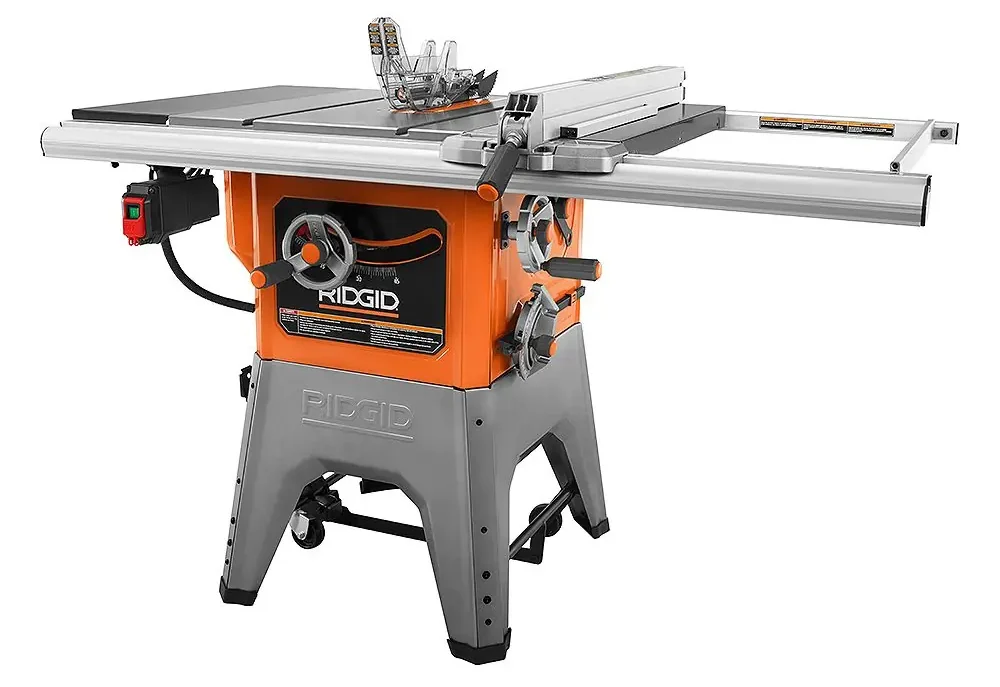
A typical example is breaking down sheet goods. I’ll often start with my RIDGID R8652 Brushless 7-1/4” Circular Saw to reduce large plywood panels into manageable pieces. Those parts then move to my RIDIGI R4512 10 in Table Saw for ripping and final sizing before eventually ending up at the miter saw for crosscuts or trimming to final length. That workflow has proven efficient for the kinds of projects I typically build.
The saw has also handled far more than wood. I’ve used it to cut PVC pipe, Lexan sheet, and aluminum channel. Having one machine that can tackle such a variety of materials has made it more valuable than I originally expected.
What I'd Do Differently Today
If I could go back to 2018 knowing everything I know now, I’d buy the RIDGID R4222 12-inch Sliding Compound Miter Saw instead. Not because this saw disappointed me. Not because it failed. Simply because my woodworking journey eventually expanded beyond what a 10-inch saw was designed to handle.
The additional crosscut capacity of a sliding saw would have eliminated countless situations where I needed to flip boards over to complete cuts. It would have reduced setup time, simplified larger projects, and provided more flexibility as my projects became increasingly ambitious.
Ironically, this isn’t really criticism of the R41121. It’s advice I’d give almost any new woodworker. Think about where you expect your hobby to be in five years, not just what you’re building today. Buying slightly more capability than you currently need can save you from replacing an otherwise perfectly good tool later. That’s probably the biggest lesson this saw has taught me.
Who I Think This Saw Is Best For
After living with this saw for years, I think it’s an excellent choice for homeowners, DIYers, and beginning woodworkers whose projects primarily involve dimensional lumber, trim work, shelving, and general home improvement.
If your work rarely involves cutting wide boards or larger trim pieces, there’s very little to complain about. The saw is accurate, dependable, easy to use, and requires very little maintenance beyond routine cleaning and blade changes.
On the other hand, if you’re already planning to build furniture, cabinets, large outdoor structures, or expect your woodworking hobby to grow significantly, I’d seriously consider spending more on a 12-inch sliding model from the start.
You’ll appreciate the extra cutting capacity far sooner than you probably expect.
Final Thoughts
The RIDGID R41121 isn’t a perfect saw, but it has been an exceptionally dependable one.
Over more than five years of ownership, it has consistently performed the tasks it was designed to do without developing any meaningful mechanical problems. Aside from an LED cut-line system that stopped working early in its life, the saw has remained reliable, accurate, and easy to live with. More importantly, it has helped me complete projects while my woodworking skills continued to grow.
The biggest weakness I discovered wasn’t really the saw at all, it was my purchasing decision. As a beginner, I underestimated how valuable the additional capacity of a 12-inch sliding miter saw would become. That’s a lesson experience can teach far better than any product specification or online review.
Would I spend my own money on this saw again? That’s where the answer becomes nuanced. I have absolutely no regrets about owning the R41121, and if it quit working tomorrow, I’d replace it with another RIDGID without hesitation. However, I would spend the extra money and buy the larger RIDGID R4222 12-inch Sliding Compound Miter Saw instead. Not because this saw let me down, but because years of ownership have shown me exactly where my needs have evolved.
For someone whose projects fit comfortably within its cutting capacity, the R41121 remains a solid, dependable miter saw that delivers good value for the money. It has certainly earned its place in my shop, even if it also taught me one of the most valuable buying lessons of my woodworking journey.
I have absolutely no regrets about owning the R41121, and if it quit working tomorrow, I’d replace it with another RIDGID without hesitation. However, I would spend the extra money and buy the larger RIDGID R4222 12-inch Sliding Compound Miter Saw instead, because my needs changed over time.
Without hesitation.
- The DIY-er
- New Woodworker
- Trim Carpenters
- Cross-cutting larger than 2x6's