Motorola XTL Series Digital Mobile Radio
Technical articles, guides and resources for communication hobbyists...
Home |

Because of their affordability, durability, and high performance, many Amateur Radio Hobbyist & Motorola Enthusiasts like myself now utilize XTL Series Digital Mobile Radio within SKYWARN and Radio Amateur Civil Emergency Service activities.
A Brief History of the Motorola XTL Series Digital Mobile Radio
The Motorola ASTRO 25 platform, of which the XTL Series Digital Mobile Radio is a key part, entered production in the early 2000s, with initial deployments beginning around 2001-2002. This platform represented a major milestone in the evolution of public safety communications, as it marked Motorola’s transition from legacy analog systems to fully integrated APCO Project 25 (P25) digital technology. ASTRO 25 was designed to meet the growing demands of mission-critical users, offering improved audio quality, interoperability, spectral efficiency, and support for advanced features such as digital trunking and encryption.
The Motorola XTL Series Digital Mobile Radio quickly became a widely adopted mobile radio across public safety, government, and commercial agencies due to its robust design, flexible configuration options, and compatibility with both conventional and trunked P25 systems. Throughout its production life, the XTL Series Digital Mobile Radio earned a reputation for reliability in demanding environments, making it a mainstay in police, fire, EMS, and utility fleets for well over a decade.
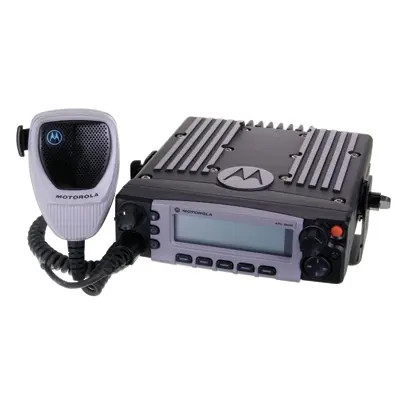
Production of the Motorola XTL Series Digital Mobile Radio officially ended in 2019, as Motorola Solutions shifted its focus to newer generations of ASTRO 25 radios Such as the APX Series. The newer APX platforms offered enhanced cybersecurity protections, improved processing capabilities, and expanded support for evolving public safety standards. Despite the end of production, many XTL Series Digital Mobile Radio remain in active service today, continuing to perform reliably in systems that have not yet transitioned to newer hardware.
The XTL series was offered in three primary models, each designed to meet different operational and budgetary requirements: the XTL 1500, XTL 2500, and XTL 5000. These radios were available in VHF, UHF, and 700/800 MHz frequency bands, allowing agencies to deploy them across a wide range of system types. Higher-tier models provided advanced features such as P25 digital trunking, AES and DES encryption support, over-the-air rekeying (OTAR), and expanded control head options, while lower-tier models focused on essential digital voice functionality.
Together, the ASTRO 25 platform and the XTL Series Digital Mobile Radio set a high standard for modern public safety communications. Even years after the end of production, these radios continue to be respected for their performance, durability, and technical sophistication. For many communication professionals and radio hobbyists, including myself, the XTL remains an iconic and highly regarded example of Motorola’s engineering during a pivotal era in the shift from analog to digital radio systems.
Not all downloads on this page are available to every visitor.
Learn how download access and indicators work.
Marketing Materials
Type: PDF | Version: R3-1-2033B | Size: 142.0 KB
Type: PDF | Version: R3-1-2027F | Size: 102.4 KB
Type: PDF | Version: R3-1-2028D | Size: 96.3 KB
Type: PDF | Version: R3-1-2034A | Size: 96.3 KB
Type: PDF | Version: R3-1-12012 | Size: 104.5 KB
Type: PDF | Version: R3-1-203A | Size: 104.5 KB
Type: PDF | Version: R3-1-2029C | Size: 89.6 KB
Type: PDF | Version: R3-1-2031A | Size: 128.7 KB
Type: PDF | Version: R3-1-2011A | Size: 16.3 KB
Instillation Guides & Manuals
Type: PDF | Version: 6881097C72-P | Size: 860.2 KB
User Guides & Manuals
Type: PDF | Version: HLN6951A | Size: 4.3 MB
Service Bulletins, Guides & Manuals
Type: PDF | Version: 68P81096C73-O | Size: 7.9 MB
Firmware
It seems we can’t find what you’re looking for.
Codeplugs
Type: CPG | Version: R.20.01.00 | Size: 45.1 KB
Type: CPG | Version: R.20.01.00 | Size: 45.1 KB
Software
Type: ZIP | Version: R.20.01.00 | Size: 643.4 MB
Type: ZIP | Version: R.20.01.00 | Size: 5.2 MB
Type: ZIP | Version: R.15.00.00 | Size: 147.1 MB
Type: ZIP | Version: R.2.00.00 | Size: 24.8 MB
Links
Product Info: ASTRO® XTL 5000 Digital Mobile Radio (Discontinued)
Frequently Asked Questions
What is the Motorola XTL Series?
The Motorola XTL Series is a family of ASTRO 25 digital mobile radios designed primarily for public safety, government, and commercial communications. The series includes the XTL 1500, XTL 2500, and XTL 5000, supporting both analog and APCO Project 25 (P25) digital operation.
What is the difference between the Motorola XTL 1500, XTL 2500, and XTL 5000?
The XTL 1500 was the entry-level model, the XTL 2500 offered additional features and expandability, and the XTL 5000 was the flagship model with advanced options such as digital trunking, encryption support, multiple control head configurations, and expanded system capabilities.
Are Motorola XTL radios still supported?
Motorola officially ended production of the XTL Series in 2019 as newer APX radios replaced the platform. While official support is limited, many XTL radios remain operational in public safety, commercial, and amateur radio applications.
Can Motorola XTL radios be used for amateur radio?
Yes. Many amateur radio operators use Motorola XTL radios because of their durability, excellent receiver performance, high transmit power, and support for conventional analog and P25 digital communications.
Do Motorola XTL radios support APCO Project 25 (P25)?
Yes. Depending on the model and feature set, Motorola XTL radios support APCO Project 25 digital voice communications, making them popular among both public safety agencies and amateur radio operators interested in P25 networks.
What frequency bands were available for Motorola XTL radios?
Motorola manufactured XTL radios in several frequency ranges, including VHF, UHF, and 700/800 MHz bands. The exact coverage depends on the specific model and radio configuration.
What software is required to program a Motorola XTL radio?
Motorola XTL radios are programmed using Motorola ASTRO 25 Customer Programming Software (CPS). The correct CPS version depends on the radio firmware and model being programmed.
Can Motorola XTL radios be programmed for ham repeaters?
Yes. XTL radios can be configured for amateur radio repeaters by programming the appropriate transmit and receive frequencies, CTCSS/DCS tones, channel parameters, and other operating settings using Motorola CPS.
Why are Motorola XTL radios popular among radio hobbyists?
Motorola XTL radios are valued for their commercial-grade construction, strong RF performance, reliable audio quality, high transmitter power, and extensive feature sets that are often available on the used market at affordable prices.
What control heads are available for Motorola XTL radios?
Depending on the model, XTL radios were available with multiple control head options, including basic displays, full-function displays, remote-mount configurations, and advanced control heads designed for public safety applications.
Do Motorola XTL radios support encryption?
Many XTL radios were capable of supporting encryption features such as DES and AES encryption when equipped with the appropriate hardware, firmware, and licensed options. Higher-end models such as the XTL 5000 commonly included these capabilities.
Encryption is generally not permitted in the amateur radio service. This is outlined in the FCC regulations under Part 97, which governs amateur radio operations. The primary focus of these regulations is to ensure that amateur radio is used for non-commercial communication and technical experimentation.
Are Motorola XTL radios worth buying today?
For amateur radio operators, collectors, and Motorola enthusiasts, XTL radios can still provide excellent value. Their rugged design, strong performance, and compatibility with many analog and P25 systems make them attractive alternatives to newer commercial radios, provided the buyer understands programming and support limitations.

